This month the choice of topic was quite easy. I decided to write about my maternal Grandmother: Azniv Merian. We have always called her Grannie. We are not really sure of her exact date of birth. We celebrate it on January 1st. January 1, 1907 is the date she gave to US authorities when immigrated here from what she always refers to as “the old country.” So, we are celebrating her 100th birthday.
Actually we never really celebrated her birthday. It is not because we did not want to but more because she did not want to. Grannie really does not enjoy being the center of attention or having any kind of fuss made about her. She would do anything for her children, grandchildren or great-grandchildren but she would react by saying “No, no, no tank you. Notink for me” to getting downright cantankerous whenever given a gift.
It is her way still. We are planning a 100th birthday party and we are all laughing and wondering if she will even attend. Even though it will only be family; that could be up to 40-50 people. Grannie’s hearing is bad and in crowded rooms, she cannot hear what anyone is saying. She quickly feels shut out and gets fustrated. But we will do something as our Grannie is turning 100, we just have to be flexible in our planning.
Grannie was born in Yeghiki a small village in what the Armenians referred to as the Kharpert Province. It is in the environs of Elazig in modern day Turkey. There are essentially no Armenians, or very few that know they have an Armenian heritage, living there today. She was born in the waning years of the Ottoman Empire and was a victim of want the Armenians call Genocide and what the Turks simply call World War I.
Grannie would never say she was from Turkey. She would mostly refer to, as described above, “the old country” or officially say she was from Armenia. When she was entering the United States, there was no Armenia and the officials wanted to put Turkey as country of origin, she refused to admit she was from Turkey.
Grannie was born Azniv Frankian. She was the youngest child Boghos and Elmas (Terzian) Frankian. She had four elder siblings. Her sisters were Khatoun, and Nazeli. Her brothers were Levon and Samuel and they all lived in Yeghiki with their grandparents Sarkis and Nonig (Baghdegian) Frankian as was the custom of the day.”
Her childhood was harsh even before the tragic events of 1915. Her grandfather seemed well off, per Grannie’s recollection, he had vineyards and the family was into shoemaking. Her father was not family oriented. He was only interested in philandering and getting himself to America. As a result, the Frankians snubbed Elmas and her children after Boghos left them to go to America on his own. There was never enough to eat and Elmas worked hard to just keep her family intact and fed. If that was not hard enough, 1915 and the massacres and deportations further disrupted the family.
Her sister Khatoun and Grannie made it to the US settling in and around Detroit. Grannie did live with her father for awhile in Keego Harbor, MI, but soon she took her Grandfather’s point of view and divorced herself from him. She would always say that “He was durty rat.” Her brother Levon escaped the Turks and is rumored to have gone to Armenia proper and we never heard anything more about him. Her sister Nazeli succumbed to some kind of cancer in Cuba en route to the US. Her brother Samuel stayed in Aleppo, Syria. I knew both Khatoun, since she lived close by, and Samuel, because he came to visit in the early 1960s.
Grannie married Levon Merian in a marriage arranged by her father. They settled in Detroit and had three children, their son Azad (Ozzie), my mother Manoushag (Violet) and my aunt Soseh (Suzanne). Azad had four children, Sandy, Leo, Ralph and Chris. My parents had four children of which I was the oldest and three daughters, Nancy named for Nazeli, Laura, and Ani. Soseh had two children Paula and Stepan. She also has fifteen great-grandchildren.
I would write more about her life but my aunt Suzie just finished a book about Grannie’s life and self-published it for the family in honor of her centennial. I have an e-draft of the book and would be happy to share it with anyone… once I get my Aunt’s permission.
So, I am going to write about my life with Grannie and my personal memories and experiences.
Classic Grannie: When Judy was pregnant with Aram, it must have been late 1980 or early 1981, Grannie called me because she had seen a television show on genetics. She was convinced, after seeing this program, that the baby would be smart because she reasoned that both parents were pretty intelligent. She was fascinated by the program and talked about various physical and personality traits that would be influenced by genetics. It was also, coincidently, the first day that Judy had felt the baby move. I related this news to Grannie. She became even more enthusiastic and asked “Who vas she looking at when she felt da baby kick?” I asked why she asked that. She responded, “Dat is who the baby will look like.” That is vintage Grannie, one foot in the modern world and another firmly planted in “the old country."
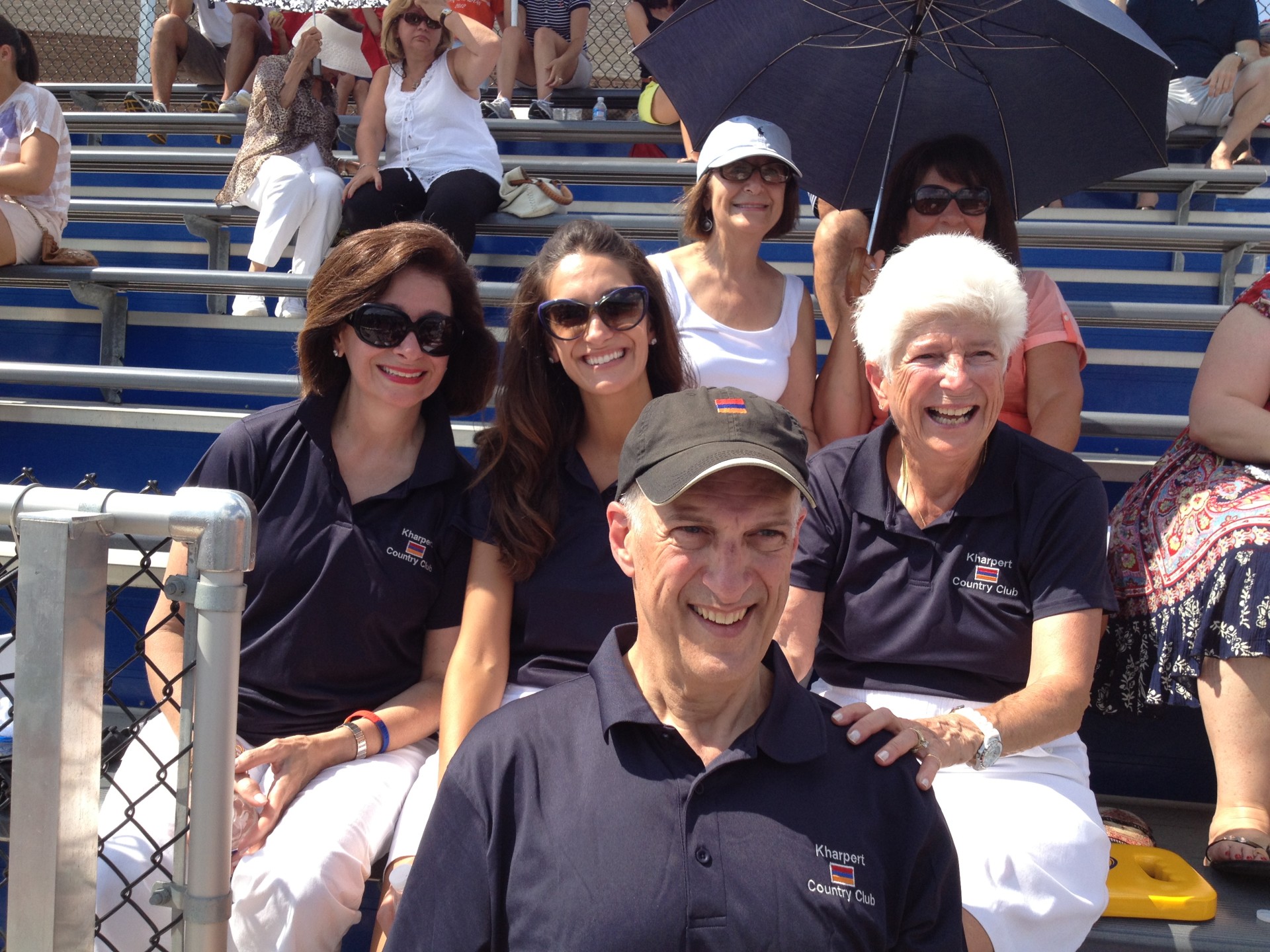
When Armené was baptized in 1986, we had the dinner at the Pine Lake Country Club in Bloomfield Hills, Michigan. It was a very nice event. A good friend, Vartan Agbabian, performed selections from Aram Khachatuurian’s Album for Children on the piano. I got up to say a few words, to thank everyone for coming and to reflect on the day. I decided to add a little levity by beginning with “Thank you everyone for coming to Armené’s baptism. It is a special day for our family. It is even more special that we are having the dinner here at the beautiful Pine Lake Country Club because there is a long tradition in our family of having baptismal dinners at the Kharpert Country Club.” This comment got a few chuckles. Then Grannie, already losing her hearing, blurted out to my mother loud enough for everyone to hear, “Vat he saying? Vee don’ have no country club in Kharpert!” Everyone cracked up. As it turns out, I was the straight man, Grannie got the laughs.
During the early 1980s, in the time of mini-series that began with Roots, I was sitting at home watching television. Grannie called and simply asked, “Vat you vatching? Shotgun?” She was clairvoyant. I was watching James Clavell’s Shogun. I related this cute story to my friend and drummer in our band, Vaughn Masropian. To this day, he begins every phone call with “Vat you vatching? Shotgun?”
Grannie is well known in the family for her abrupt ending to her phone calls. After she has finished with whatever it was she was calling about, she would simply end the call with “OK, bye” and hang up. It would always catch whoever it was she called by total surprise when this happened. You knew it was coming and yet she was so quick and abrupt, we would always be caught in mid-thought or mid-sentence, left hanging on to the phone, and laughing to our selves. It got to the point that the cousins would simply end calls with “OK, bye.” But only Grannie could and would catch us off guard.
Her other classic phrase is “How stupid you could be.” You never really wanted to hear that one growing up. But, now we say it to each other all the time and laugh.
Grannie was in the hospital in the mid-1990s. She had a rather serious surgery at St. Mary’s Hospital in Livonia. She woke up during her recuperation and saw a nurse and doctor in her room. She told them, “You know I am Armenian, just like Dr. Jack Kevorkian. I bet you don’ let him in dis hospital.” She can be pretty funny.
Grannie also had an incredible green thumb. She loved her bardez or garden. She grew flowers and vegetables. She had quite a bountiful harvest supplying the entire family with cucumbers and tomatoes throughout the summer and into the fall. She had flowers everywhere, inside and outside. She would move her tropical plants indoors in the winter and back out when the weather broke. She would always visit Frank’s Nursery to see what they had, what was new. If something caught her fancy, she might buy it or, more likely, she would snip off a little sprig and pocket it. Upon returning home she would put the cutting in water and nurture the cutting into a new plant: petty larcenist and gardener extraordinaire.
I took to Armenian music influenced in no small part due to Grannie and the tapes her clarinet playing brother Samuel would send us of his band in Aleppo. After I began to playing professionally, I knew Grannie liked that I played but in the grand Armenian tradition would never come right out and say it. Once at a picnic the great John Bilezikjian was visiting from California. I invited him up to play and he really put on a good show. I was standing next to Grannie enjoying the music and she told me, “He is good. Why you don’ play like him?” Ah yes, good old fashioned Armenian encouragement.
When I took a job at Colgate in New York in 1990, Grannie was living at the St. Sarkis Senior Citizens Towers by our church in Dearborn. When I came back the first time after moving, I made the Sunday visit to the Towers to see Grannie. As I walked through the lobby, all of the other elderly Armenians were more attentive to me then they ever were. They all were asking how I was and sharing stories about their children and grandchildren, who was about to graduate and what kind of careers they had going.. When I got to Grannie’s apartment, I commented on the difference I sensed in the lobby. Grannie said, “Oh, I told dem you were Armenian Iacocca, president of Colgate.” I responded, “But, I am not.” She laughed and said, “But dey don’ know dat.” Very funny.
When she had her own car and was mobile, Grannie would attend most family gatherings. But, upon giving up her car and certainly upon moving into the Manoogian Manor, an Armenian Retirement home in Livonia, MI, she was less apt to come. She would often say yes and then at the last minute change her mind. My son Aram was an undergraduate at Michigan and would miss seeing his great-grandmother at these events. So, my now lawyer son drew up his first contract on a 3x5 card that said, “12/99 I promise to come the next time Aram is here x Agnes Merian”. He actually printed the Agnes Merian under the underline. She signed it Azniv M. in Armenian script and did, in fact, attend the next time Aram was in town. That contract is part of family history and has been posted on my Mother’s refrigerator since it was signed.
As children, we used to pile in Grannie’s 1960s vintage powder blue Ford Falcon. There would be seven or eight of us plus Grannie and my Mother or Aunts. We would go to Williams Lake in Waterford, MI. We would stop in Keego Harbor and visit Aunt Khatoun and then go to the home of Khatoun’s daughter Vee who had lake privileges. It was incredibly crowded in the car and took forever to get there. There were no seat belts in the car and I believe that today it is probably illegal to have that many people in a car. The youngest sat on the laps of the eldest. Anyone passing us had to be amazed by the sight. We looked like third world refugees or migrant workers. We always were happy to be together and felt like we were on a real adventure. We did this two or three times a summer over a four or five year period. Now and then, we would vary the beach to Kensington State Park or Camp Dearborn. When we did not take Grannie’s car, we would go in Aunt Suzie’s VW Bug. This was even more cramped and comical as we were packed in there like circus clowns. But, Grannie took us on these outings and we had a great time.
These are just a few of the moments and memories that stand out in my mind. Each grandchild has their own memories and special moments. Grannie has a distinct and unique relationship with each of us.
Family Cooking Legend: Grannie could never do enough for her grandchildren. She would have us stay over simply as part of her routine. She would feed us well. Every meal was a feast, except maybe for the occasional liverwurst sandwich. I wonder if the great and rich food and more than plentiful quantities had anything to do with my life long weight issues. It has been well theorized that many Armenian mothers and grandmothers of Grannie’s generation overcompensated with food having experienced the horrors and starvation of the 1915 Genocide. This psychology of genocide survival is a topic for another letter. I realize that I cannot attribute any blame to Grannie for my weight issues. I have cousins and siblings who were subjected to the same largess but maintained much slimmer physiques. They just didn’t eat. They never ate even when Grannie uttered her famous “Eat or I shove it down your troat!” While others ignored her and continued on moving their food around their plates, I ate with gusto. I loved to eat and my Grannie could put it out the food, delicious and buttery, in great abundance.
Grannie was not big on garnish and presentation. She was big on quanitites and taste. Her suboreg, ghatah, pilaf, kebab, kheymah, turkey and chicken… unbelieveable. Her heriseh, a dish of oatmeal, shredded chicken, and butter seemingly in equal proportions, is unmatched in my memory.
She even had her own oatmeal cookie recipe. These savory cookies were a rich mix of coconut, walnuts, raisins, and chocolate chips were like mini-haystacks of joy. She would make hundreds for major holidays. Every grandchild, even those who would eat nothing else, would enjoy these cookies. She made so many we were eating them over the next few weeks. They were called oatmeal cookies, but in truth the oatmeal was only there to hold the other ingredients together. Every time she made them, the recipe would differ slightly depending on what ingredients she had in which proportions. For all of us, Grannie’s cookies were Oatmeal Cookies. When we were given any “plain” store bought oatmeal cookies we would scoff, “these aren’t oatmeal cookies.” As Grannie is no longer able to cook the way she used to, my mother has taken over the making the oatmeal cookies. Over time and considerable input from the family, she has mastered the formula and makes a pretty darn good oatmeal cookie these days.
Grannie made her own yoghurt until she was too old to do so. She did not use any wimpy skim milk either. It was whole milk all the way (all the whey?). I believe she would have used raw milk if it was readily available. Her madzoon, the Armenian word, was always tasty, thick and creamy. In later years, it had a little sweetness to it. I recall asking her how she made it so thick, creamy and all of late a touch sweet. She told me, matter of factly, “I put Cremora in it.” I laughed. Here she was again with a foot in the new world and the other in “the old country.” She made her own madzoon in the ancient style but then started using Cremora, a chemical marvel of modern food chemistry, to thicken it up. That’s Grannie.
Whenever we were sick and bedridden as children, riddled with the flu, strep or whatever, Grannie would show up with bags of juice. She would mix orange and pineapple juice and make us drink and drink until we were urinating as much as we were drinking. She washed out the germs and we would be better and back at school probably a few days later than if we were simply left on our own. She took the bed rest and drink plenty of fluids adage quite seriously and it definitely worked.
The Serious Grannie: Grannie is fiercely Armenian. She wanted everyone to know and revel in our culture. She wanted, actually expected, everyone to marry an Armenian. She was none to subtle in this point of view. If you didn’t marry an Armenian, it was simple; she would not go to your wedding. Upon having a child, all was forgiven and you were back in the fold. It sounds dated but it is true. When my sister Ani married Jeff, Grannie attended the wedding. I suggest she was softening up a bit. Her response was obvious and just as dated, “She’s a gurl. She don’ have much choice who asks to marry her.” She put the onus on the grand-sons. A couple of my cousins never had the same relationship with her after she did not attend their weddings. In this case, she had both feet firmly in “the old country.”
Grannie believes strongly in the power of dreams to foretell the future. As she believed it to be an exclusively female gift, she would only discuss this with her grand-daughters. I only know of this because my sister Nancy would tell me.
While Grannie was fiercely Armenian and Armenian life in the United States revolved around the church, you would not find her attending services very much. She has told me several times, “How could God let such a ting happen to da Armenians?” She would not elaborate but it is like the stories of devout Jews in concentration camps putting God on trial. Grannie would definitely be a prosecutor in such a trial.
Sadly, four years ago, my sister Laura passed away from a brain aneurysm. Her sudden passing at the age of 46 was a real blow to Grannie. They were very close and it was incredibly more sad to how this effected Grannie who had to see a grandchild taken from her after everything she saw and experienced in her childhood. They had a wonderful relationship. The shared many viewpoints. Laura was the only one of us who could actually go to Manoogian Manor and get Grannie and bring her to an event. Grannie responded to Laura differently than the rest of us. They just kept getting closer and closer from my perspective.
The most famous Armenian to come from Yeghiki was Sahag II Khabayan the Catholicos (Pope) of the Cilician See based in the ancient city of Sis. He was Catholicos during the dark years of 1915 and responsible for relocating the See to its current location in Antelias outside of Beirut, Lebanon. To read more about this remarkable son of Yeghiki, please read the on-line book at www.armenianprelacy.org/seminarybook.pdf. I did not know of Catholicos Sahag growing up. Other Yeghiketsis I know in Hartford, actually recall having portraits of this great leader in the homes. I asked Grannie if she knew of this famous son, she basically classified him with all things religious.
The last of a Breed: This is by far the longest e-letter I have written. Once I started, I could not stop. There are so many stories and memories.
Grannie is but a few remaining survivors of her generation, the last generation to have been born in Western Armenia. She survived Genocide and worked her way here to build a life and raise a family.
I knew a lot of people in that generation. They provided a link to and a glimpse of life in that “old country.” The link now is mostly in my memory. For me, Grannie’s contributions are the largest part of that memory.
My son stated that if one of the great-grandchildren were to marry and have a child soon, we might be able to get a five generational photo. That would be pretty cool.
Thanks for reading this long winded labor of love and my birthday gift to Grannie.
=============================
Grannie passed away in June 2007.
The photo was from November 2005.