Tomorrow,
July 18, will be two weeks since the 4th of July mass shooting in
Highland Park, IL (Terror
in Highland Park).Highland Park
being two towns to our south, it was the closest I have ever been to this kind
of scourge that plagues our country.
This
evening I was sitting at an outdoor concert of 60s and 70s R&B and Soul
music in Lake Bluff.Lake Bluff is one
town to our north.The concert was in
their cozy little town center on the green with a gazebo where the band was
set-up.It was a most pleasant, 70
degree, evening and there was a good sized crowd.Families were there picnicking on blankets or,
as we did, seated in camp chairs.We
were eating dinner and enjoying the beautiful weather, toe-tapping music, and
our dinner.Children were running to and
fro having a great time.A few people
danced.Basically, everyone was enjoying
themselves.It was pure Americana.
As I was
sitting there, I looked around and saw the quaint Tudor buildings around the
green.A thought struck me, the Highland
Park gunman was on top of a building in their town center.I looked around to see if there were any
greater police presence.I noticed one
police car when we arrived but it was no longer there.
Then I
realized that it was not even two weeks since the Highland Park shooting.It seemed like ages ago.The shock and terror everyone around here was
feeling dissipated rather quickly, too quickly, and we had all resumed our
normal routines, me included.
Part of
this is because these mass shootings are rare enough, that we are not really
that worried being involved in one.The
other more distressing part is that we are numb to the frequency of this mass
shootings.We are concerned and shocked
for a day or two, and we move on.
While
writing this piece, I learned there was another mass shooting earlier today in
Indiana.In a mall outside of Indianapolis,
the Greenwood Park Mall.A gunman armed
with a rifle and several magazines, opened fire in the food court there and
killed three people and injured two others.A bystander, carrying a legal weapon, immediately opened fire and killed
the perpetrator thankfully.
In less
than two weeks, we experienced another incident.It has been fifty-four days since the horrific
school shooting in Uvalde, Texas.We
really have to put a stop to these shootings.People are clamoring to renew the ban on assault weapons, e.g. the
AR-15, with large capacity magazines.This
seems to make the most sense given the Washington Post statistic that is being
shared across social media.
Assault
weapons were banned from 1995 to 2004 and mass shooting decreased 37%.
After the ban
ended in 2004 mass shooting increased 138%.
Is this true?It certainly seems to make sense.It appeals to our wanting a simple and easy
fix.There is a couple good articles on
this subject.One is in the Austin
American-Statesman and the other is from Rand.
Another solution
is to arm more people so we can defend ourselves and others when a mass
shooting occurs.What could possibly go
wrong if we were to advocate this?
For the
time being, I think I am on the side of banning assault weapons and large capacity
magazines as a start.
Growing up
there was always music in our house.We
had a radio and a record player.They
were nothing special, nothing high end, but filled our house with music.We had the requisite kids records from 78s to
LPs.We wore the Mary Poppins Soundtrack
and Burl Ives’ The Little White Duck and Other Children’s Favorites.We had and often listened to our four classical
recordings, The Best of Tchaikovsky (excerpts from Carmen and The Nutcracker
Suite), two Beethoven Symphonies (the 3rd and the 5th),
and Rimsky-Korsokov’s Sheherazade.
When my
Dad was home, he would listen to Armenian Music.We called it Armenian music but it also
included Greek, Arabic, and Turkish.He
loved the clarinet.Naturally, being in
Detroit, Passport East and the Exciting Sound of Hachig Kazarian
were mainstays.He also liked Artie Barsamian’s
The Seventh Veil and Portraits of the Middle East by the Gomidas
Band.I covered his passion and influence
in a January 2021 post, For
the Love of the Music: Thanks Dad!
From day
one, I gravitated to music.We had a
little record player and I had a stack of Disney and other classic kiddie song singles.Before I even went to school, I knew every
record simply from the label graphics.Armenian
music was something I grew-up with.I
always liked it but the intensity grew with time.It basically took over when I started playing
the oud and became a weekend musician.
I listened
to everything Armenian that was available.At
first, this meant on LPs, 45s, and 78s that were around the house.With the dawn of the cassette tape, the repertoire
grew to include more live recordings.Yet, I
was limited to albums and live recordings made in the US, mostly by the active Armenian
musicians.There were scant few
recordings from Turkey or Armenia.Those
who had access to recordings from the homeland kept them to themselves.Sure, they might play them for me, but they
rarely made a copy often saying something akin to, “I can let you listen to it,
but I promised so and so not to share it.”While I might have enjoyed those moments of great music, I was
always thinking “hell, I would rather you didn’t even play it for me and spare me from
hearing that condescending ‘cannot share it with you’ bullshit.” It must be noted that this behavior was by no means universal e.g. Udis John Berberian and John Bilezikjian were very open, encouraging, and helpful to me as were others.
One theory
was that some of this music was held close to the vest because some musicians
used their stash of music as material for their own albums.Cool, I got it.It was business.Branding and delivering something new and
different was as an important an edge as was talent.This all began to change in the late 80s and I
can attribute it to the dawning of globalization.
I recall
getting a dubbed cassette of a dubbed cassette of Ibrahim Tatlises’s Leylim Ley
album.It opened my ears, eyes, and soul.I was blown away.I wanted to play in his orchestra and began
to fully realized what it meant to not have our own country.Soon, there were a few places, in Boston and
New York, where you could buy these albums.Access to music from Turkey became a lot less exclusive.
Fast forward
to 2005.On Valentine’s day of that year,
Google launched a service called YouTube.I am not sure when I first became aware of YouTube, but it was a huge game
changer.There was a lot of Middle
Eastern music and music videos available on the platform.It was a giant musical candy store.Today, I would have to say almost everything
I want to explore and listen to is available on this amazing service.There is no longer any exclusivity
whatsoever.Everything is basically available to everybody. Today, the offerings are 100
times, maybe a 1,000 fold, more than they were in the early years of YouTube.I have lost hours exploring and listening all
kinds of Armenian, Arabic, Greek, Persian, and Turkish music. These days, musicians and aficionados are sharing YouTubes by text, social media, and sharing ideas like never before.
It is a
great place to explore and learn.You
can realize that Harout Pamboukjian’s Hye Kacher uses a melody borrowed from Makarem
Sari Baglar which in turn was borrowed from the Kurdish Lo Berde or… vice versa.It is where you can learn how melodies flow
between cultures.
In the past
month, I learned about the origin of two pieces that I always loved on albums
from the 1970s.One was, Instrumental (Oud), from John Berberian’s A Middle Eastern Odyssey.The other was Hey Yala on the Souren Baronian
Middle Eastern Soul album.I always
thought the Berberian piece, with an exquisite improvisation, was based on Arabic
melody.Hey Yala?I knew it was a Turkish piece and for some
reason just assumed it was a folk song.I was wrong on both counts.Instrumental (Oud) was based on a nakarat or bridge of a classical Turkish piece:Seninle ey gül-i ahsen.Hey Yala was also another classical Turkish
piece:İçtim Suyunu Şu Coşkun Derenin.Even more surprising is that they were both composed
by the same person:Bimen Şen, who was
born Bimen Dergazaryan.There is not a
lot I could find on Şen in English on the internet.From turkishmusicportal.org:
Born in Bursa, his first entrance into music was at the age
of eight, when he began singing hymns in an Armenian church. In 1884, Hacı Ârif
Bey went to hear Bımen, the beauty of whose voice had become known beyond
Bursa. At the suggestion of Hacı Ârif Bey, he went to Istanbul in 1887. When he
first arrived, he survived by working as a secretary for an Armenian banker,
and singing hymns in church. He studied Turkish music with Hagopos Kıllıyan and
Lem’i Atlı. He adopted the last name “Şen” (Cheerful) from the Kürdili-hicaskâr
şarkı “Yüzüm şen...” (My face is cheerful...), which was very popular at the
time. He made many records and towards the end of his life, sung in nightclubs.
As he didn’t read/write music, only a few of his compositions were notated by
Armenian musicians. For this reason many of his unnotated songs have been
forgotten.
A more extensive
biography and write-up is available on eksd.org.tr along
with sheet music for 176 of his songs.I
wonder how many other songs he wrote that were lost.As he was born in 1873 and died in 1943, I
also wonder how he navigated living and working in Istanbul through the Armenian
Genocide and afterward.
I have
known of Bimen Şen as a composer of classical Turkish music for maybe twenty
years.I even bought a CD of his
compositions and learned he was Armenian in the liner notes.That was a nice surprise. Now, I am delighted
to learn these two pieces I have known and played for years were his
compositions.
Live,
learn, and keep learning.There is no
end.It is a great passion.
Armenian music is rich in history, tradition and genre. It can be liturgical music. It can be classical music in both the Western sense or in a traditional Armenian style. And it most certainly can be folk music—Eastern or Western with traditional instrumentation or modern keyboards, guitars and drums. For those of us children, grandchildren or great-grandchildren of survivors who migrated to America after the Genocide, Armenian music is rooted in the music those amazing people brought with them. It was the village music that sometimes overlapped with Kurdish, Greek, and, yes, even Turkish music. It has always been our music. Generations of musicians have preserved, perpetuated and evolved this music. Sometimes it is called kef music, others might call it “deghatsi” music and picnic music. To generations of AYFers, it is the soundtrack of dances, parties, the Olympics, and, without too much exaggeration, of our lives.
Musicians often worry about this “deghatsi,” Western Armenian, kef music. Will it last? Will it fade away? Who will take it over? Will they make it better while preserving the core of what makes it so special, thatje ne sais quoithat gets into our hearts and souls and ties us to our culture in the most visceral way. I believe it is in my very genetic code, and I know I am not alone in thinking this way.
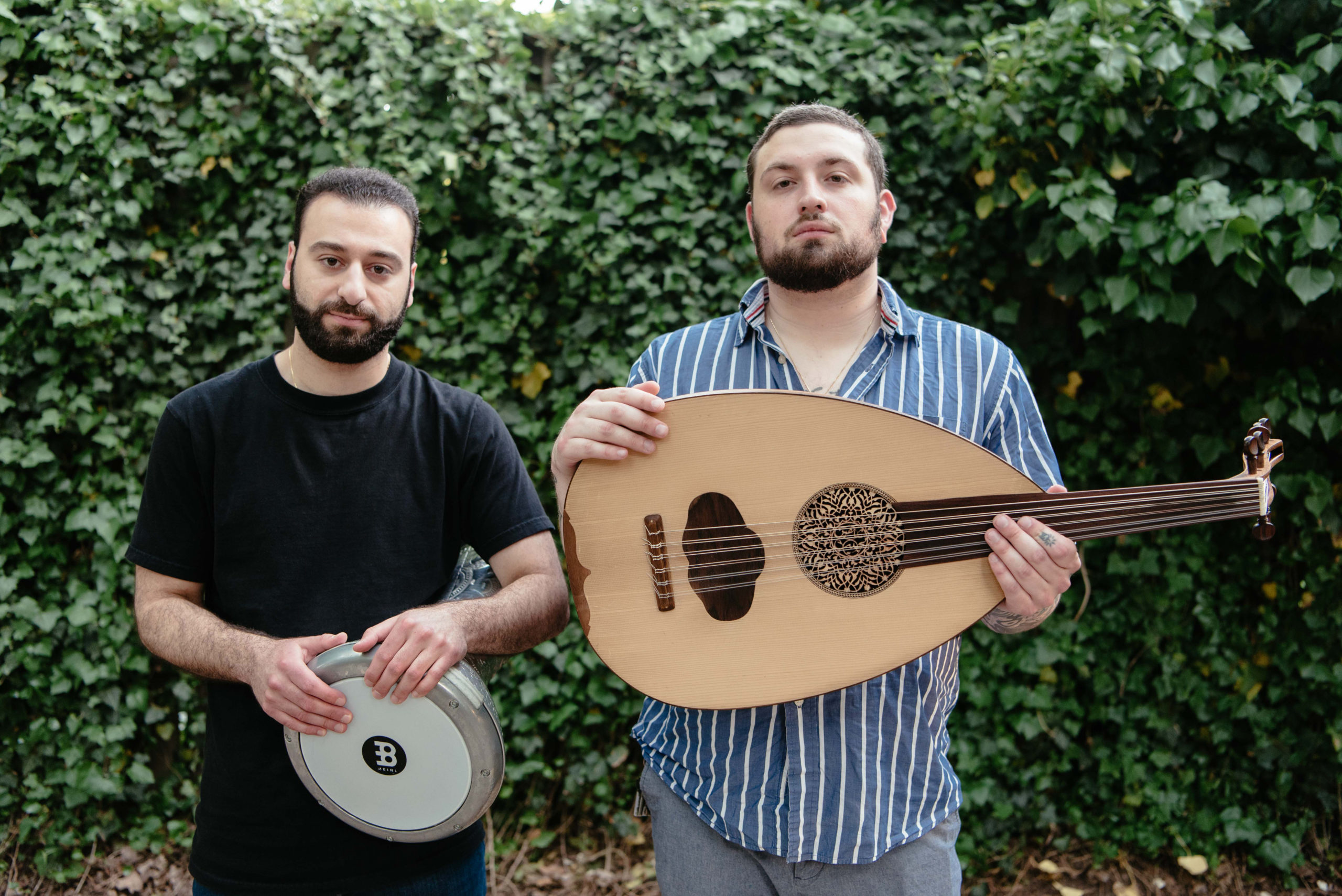
Well, it does my heart good to report there is nothing to worry about. There is a cadre of young musicians that are equally enticed by and devoted to this music. They are quite talented, versatile and entrepreneurial. They love our music and want to play. They want to entertain and share their gifts and talent. Two of these musicians—Alek Surenian and Sam Sjostedt—just formed a band called Armadi Tsayn, and they are touring Armenia the next two weeks. They recently recorded and released a single, “Artsakh Aghves.” Surenian and Sjostedt are also part of the Norkef Ensemble, which isperformingat the upcoming AYF Olympics in Worcester.
Armadi Tsayn founders Alek Surenian and Sam Sjostedt (Photo: Knar Bedian)
I had the virtual pleasure of interviewing the founders of Armadi Tsayn before the start of their tour in Armenia on June 28. As a bonus, I have also included comments from their teachers and mentors.
A.W.: How did you two decide to form this group and why the name Armadi Tsayn?
Alek Surenian and Sam Sjostedt:It started as a pretty vague idea. Once we started having a couple performance opportunities offered to us, we wanted to have a name that would fit what we were doing the best we could. The chemistry between us felt unique, and more like friends playing music than anything else.
We wanted to think of a unique name, and something that connected us to our Armenian identity. Armadi Tsayn, translated to “Sounds/Voice of the Roots” seemed to fit quite well when thinking about what to name the project. We’re always talking about our roots and where we come from, so this name seemed to be a manifestation of that idea.
A.W.: Is it just the two of you? A.S.:No, most of the time we perform with other musicians and friends. We are always open to bringing in new people and change our sound depending on who enters. For instance, we’ve done most of our performances with Rebecca MacInnes, a Berklee graduate and violinist. She will be accompanying us during our tour in Armenia, as well asDatev Gevorkianon oud and Beck Sjostedt on guitar. A.W.: How did you meet and decide to collaborate? S.S.:We met via a connection through the AYF internship. It was friends of friends that brought us together. Once Alek moved to Massachusetts for work, we decided to start working together and bounce ideas and compositions off each other until we found things that really started to work.
A.W.: How did you create, book and otherwise arrange this awesome tour of Armenia? S.S.:Once things picked up and we established this project more concretely, the idea to perform in Armenia was shared as a possible opportunity for the future. It became reality when Alek’s friend Garin Bedian reached out to us to propose a tour in Syunik province where we would bring the sounds of the Armenian Diaspora to our homeland and breathe new energy into a region which has been combating border incursions and acts of aggression by Azerbaijan. Bedian, originally from Chicago, now lives in Meghri and has been working with us to book venues, contact locals and arrange for shows throughout the country.
AW: What is the tour schedule? A.S. and S.S.:We will start our tour in Kapan, Lijk and Meghri in Syunik and make our way north to perform in Gyumri and Yerevan.
A.W.: How are you planning to document this tour? A.S. and S.S.:We definitely aim to share our travels through the countryon social mediaand encourage locals and diasporan alike to attend our shows.
A.W.:Tell me about the recent single“Artsakh Aghves”… A.S.:It was a composition that Sam wrote only a few months ago, while reflecting on a lot of the events and tragedy of the war and its effects on the Armenian population as whole. It has a bitof a jumpy and bouncy nature to the song structure, which kind of made me think of the waya fox would hop.
It was composed by Sam, and Mal [Barsamian] and I gave our own flare to it once it was pretty much laid out in full. It was a pretty quick process, going from the brain and then into the studio with it. Usually compositions tend to lay around for months before anything actually happens, but this one just felt right to get it out while the piece was still new and entertaining for us.
A.W.: Are you planning more recordings? A.S. and S.S.:We’re definitely planning to continue releasing music. Hopefully one or two more singles, and then a full EP release. Whatever feels right to do. After we get back from Armenia, we will spend the rest of our time this summer writing and recording, aimingfor some late summer/early fall releases for new music.
A.W.: You guys recently did a concert in Cambridge. Tell us about that… A.S. and S.S.:It was extremely successful! We hosted it at the Lilypad and had two other local groups from our area, Souq El-Jum3a and The Cypress, also play with us. It was so cool for all of us to see such an insane turn out for this style of music, and people enjoying all aspects of the concert.
A.W.: Alek, how did you get into playing the dumbek? A.S.:I grew up in the suburbs of Chicago in a household where music was common, as both my parents played music in their youth. My dad was a drummer, and my mom played the piano.Some of my earliest memories hearing the dumbek was listening to kef music at local eventslike AYF Midwest Junior Olympics and the madagh picnics in Racine, WI. However, kef musicisn’t as popular in the midwest compared to the east coast. When I eventually started going toAYF events east like Camp Haiastan and Junior Seminar during my early teenage years, Iwas exposed to the music more which got me curious in giving the dumbek a try. I first got onewhen I was very little to mess around with and decided to revisit it. I began taking lessons inChicago from Mid East Beat multi-instrumentalist Jimmy Hardy. He set the foundation for me—teaching the basic time signatures and importance of keeping tempo. From there, I took theknowledge he gave me and refined my skills further while also seeking out any events I couldplay at, particularly with my close family-friend Datev Gevorkian—a fantastic young oud playerfrom Bedford, MA. Over the past few years, we’ve established ourselves as a kef duo playing atmany AYF events and recently brought on good friends like Sam and clarinetist MichaelKamalian to create the Norkef Ensemble.
A.W.: What role did your time at Camp Haiastan play in your musical development? A.S.:Camp Haiastan played a tremendous role because it provided opportunities for me to sit in with amazing musicians like Mal Barsamian, John Berberian, Ron Tuntunjian and Bruce Gigarjian, who would regularly come to perform kef music at the Saturday night dances while I was working as a counselor. It was very much a “learning by doing” atmosphere because they taught me how to play different songs, develop my musicianship and explore the nuances of playing in a full band—all while performing live. I owe a lot to them because they were always supportive and welcoming when I would ask to join. It’s an honor to have them as mentors and continue to play with them today.
A.W.: What is your day job? A.S.:I’m a footwear designer and majored in product design at the University of Illinois atUrbana-Champaign. I became interested in footwear design because I wanted to combine mypassions for sport and art into a career path and have worked at various brands such asWolverine Worldwide, Timberland, Puma and Clarks.
A.W.: Might music ever become your primary work? A.S.:No, I don’t see it as something that I would pursue full-time. My career in footwear design is something I worked very hard towards, and I plan to go down this career path for the rest of my life. However, I aim to continue my hobby of playing music outside of my day job as it is a form of escape and therapy for me. It’s a great pleasure to invest in this passion by improving my musical skills, sharing it with good friends, and getting the opportunity to perform at events and explore this new project with Armadi Tsayn.
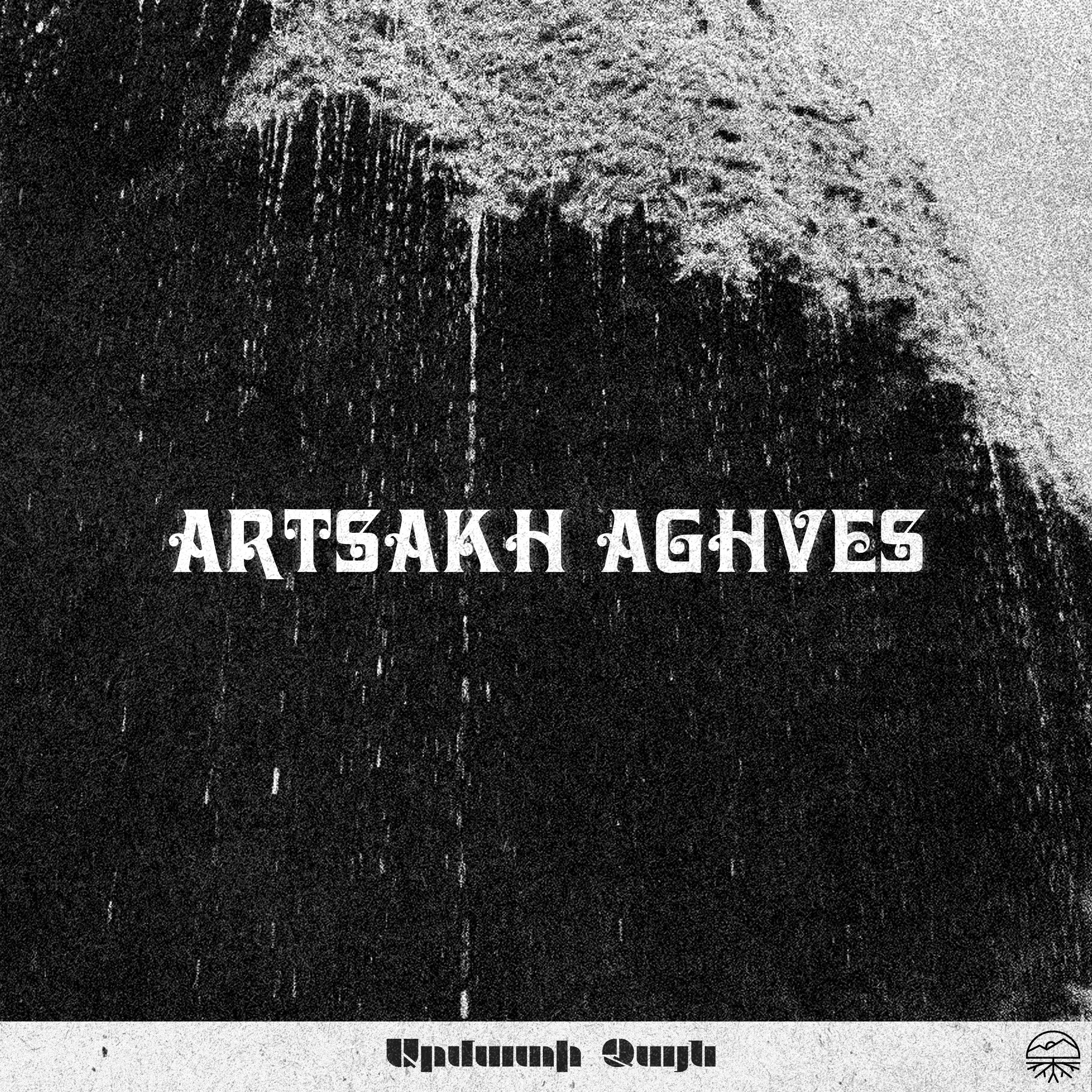
A.W.: As a designer, can we assume you do the graphics for Armadi Tsayn? A.S.:So far, yes. I’ve designed a handful of things like the cover art for our new single. The beautiful thing about music is that it’s a multi-faceted art-form where the visual and sonic collide. Having passions for both art and music, it’s really fun to combine and explore both mediums. I regularly work on graphic and apparel design projects outside of my professional work through my own brandas.amor with the AYF.
The cover art for Armadi Tsayn’s first single “Artsakh Aghves”
A.W.: Sam, where are you currently studying? S.S.:I’m an undergraduate at Berklee College of Music. I study film score and plan ontaking a second major in performance as well. A.W.: What is your primary or first instrument? S.S.:My primary instrument is the oud now. When I was around 10 to 13 years old, I mainly played drums, and then moved to guitar. I ended up playing mostly in punk, hardcore and rock bands for most of my high school years and even a bit after high school. Once I took up oud though, everything musically seemed to change, and the change was definitely for the better.
A.W.: You have a relatively well-known, if not, famous dad? Can you provide some background information and how he influenced you? S.S.:When I was born, my dad was signed to A&M Records with his band at the time—ApeHangers (he was a big motorcycle guy growing up). He had a huge song in the movie “EmpireRecords,” and that’s what most people know him from. It’s weird to this day that people Imeet will fan out over that song and him as a musician. Now, he plays in the Boston-basedband Muck and the Mires. His influence on me is honestly bigger than probably any. He introduced me to a lot of cool stuff when I was growing up, from KISS’ “Alive!” to Echo & The Bunnymen’s “Ocean Rain.” These albums had a major influence on me musically, especially hearing them at such a young age. I always had cool music around me growing up. A.W.: When did you become interested in Armenian music? S.S.:I spent a lot of time with my maternal grandparents growing up, especially during summerswhen my parents would work. They introduced the whole concept of Armenian culture tome. My great aunt shared Armenian music with me, which I found mesmerizing…artists like Artie Barsamian and Udi Hrant. I would see videos as I got older of Richard Hagopian playing the oud and just be absolutely enthralled. As I got older and researched liturgical and folk music, I was really able to get a grasp on the beauty of the music as a whole, rather than something that I just sort of did because it was in my culture. I’m truly fascinated by it and always crave more.
A.W.: The great John Berberian is your oud teacher. Please talk about his influence on your music. S.S.:Yes, I started playing the oud with John. It started with weekly lessons at his house, but it was one of those things where I went home and played for maybe four to five hours a day, if not more. I have a small studio at my parents’ house, and I would be locked in there for hours on end, listening to different players and just trying to build my ear for the music as I played. John really encouraged me to take it seriously and gave me so much knowledge and a plethora of really cool music that inspired me to attend music school. At Berklee, my oud teacher is Simon Shaheen, who I’ve grown quite close to and share a similar bond with as a teacher and friend. These are two of the most incredible players there are, and I’m forever grateful to be able to spend my time learning from them.
A.W.: I understand you also play the duduk and Mher Mnatsakanyan is your teacher. S.S.:I started playing duduk during the pandemic. It was one of those things that I bought out of boredom. A friend of mine, Ann Lucas, connected me with Mher, who taught me how to play from the ground up. It was so cool, as I’ve never played a wind instrument before, to fully immerse myself in that side of music. Mher is also the king of duduk. He is just the real deal. I’ve also been lucky enough to study with his father Manvel, who is also an absolutely unbelievable player.
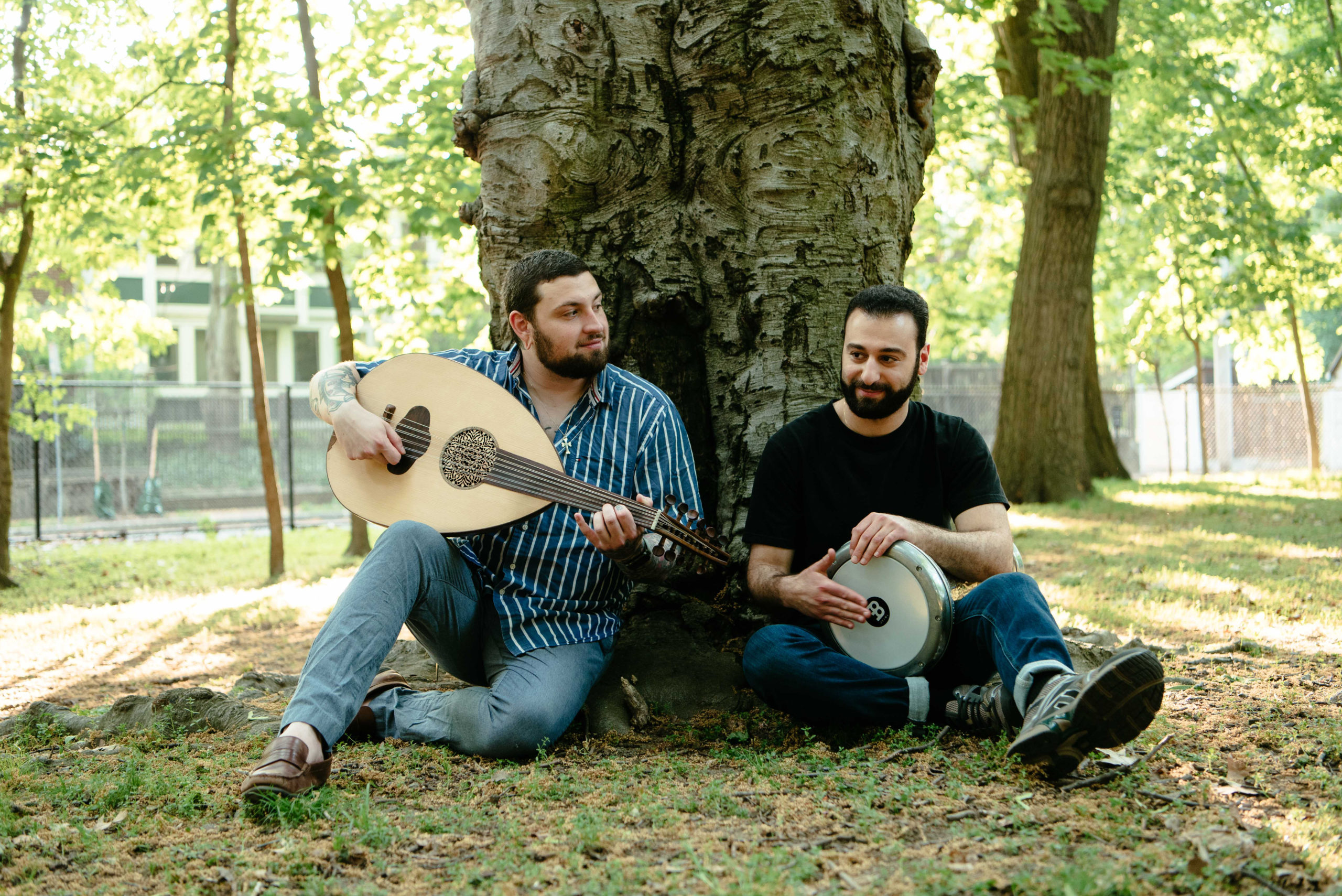
Mal Barsamian played clarinet on “Artsakh Aghves.” As usual, he did an excellent job and added a lot to the recording. I talked to Mal about Sam and Alek’s tour in Armenia. Mal related, “I remember when we used to play at the Camp, and Alek used to join us. I thought he had potential back then. I have not known Sam for as long, but I am very impressed by his playing both on oud, duduk, bass and guitar. It is a great thing they are touring Armenia. I cannot wait to hear all about their experience when they return. I really liked the song ‘Artsakh Aghves’ that Sam wrote and was honored they asked me to play clarinet on the album.”
Armadi Tsayn founders Alek Surenian and Sam Sjostedt (Photo: Knar Bedian)
I also talked to John Berberian to get his perspective on Alek and Sam. He said, “Sam has been my student for two and a half years. His passion for learning was great, and he couldn’t get enough of it. I am so excited for Alek, Sam, Datev, and Rebecca to tour Armenia and get the flavor of our people in the homeland and in turn sharing our music with them.” Mher Mnatsakanyan is from Armenia. The master duduk player was equally complimentary of the duo and their tour. “These two young individuals are very talented and incredibly enthusiastic. They will do whatever needs to be done to improve and master their knowledge of our music. I once had the chance to play with Alek and Sam. I was very impressed with their eagerness and desire to play our folk music in both Eastern and Western styles.”
Alek’s dad Ara is a good friend. He told me he is very excited about his son’s new project and tour in Armenia. “First, I have known Garin Bedian since he was born and so proud of his move to Meghri. This tour is his idea to bring Armenian American culture and AYF members to parts of Armenia that are not regularly exposed to the diaspora considering the very real possibility that some or all of this region could be lost in the very near future. Second, Datev is my godson and has grown to be an incredibly gifted musician. To see him and Alek start playing together at a young age in the AYF Olympics hotel lobby year after year to now touring Armenia is an incredibly proud moment for me. Finally, I can’t say enough about Alek’s perseverance. He showed an affinity for percussion at a young age. I recall purchasing his first dumbek and sharing with him all my Armenian kef music CDs. He would practice for hours. As he grew older, it became his personal mission to carry on this incredible musical tradition. He is now taking what he learned at home in Chicago to the homeland and sharing it with communities that may have never heard anything like this.”
It’s clear after connecting with Alek and Sam that “our music” is in good hands. Wishing them the best on their exciting tour in the homeland!