Showing posts with label Volume XXIII. Show all posts

Wednesday, July 29, 2026

Gen Z and Boomers

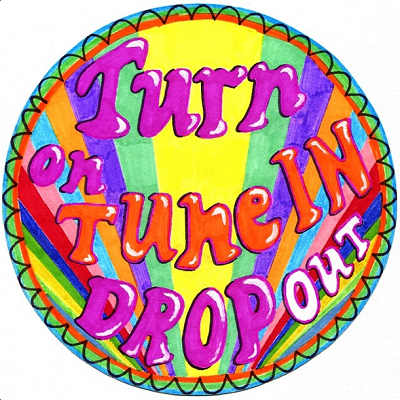
  It's Not Exactly "Turn On Tune In and Drop Out"

A former student of mine, now living and working in China, asked a simple question: “What has been the impact of the war with Iran on American college students.”

My initial reaction from the perspective of students at my school, North Park University, is about the same as the general population.  Many in the US have not been pleased with the inflation of prices on just about everything because the spike in petroleum and gasoline prices due to the constrained flow of oil through the Straits of Hormuz. 

Most of the humanitarian interest of the students has been focused on what Israel has done in Gaza.  Iran is viewed as an extension of that situation.  We have students of Middle Eastern extraction.  Some are Palestinian, a larger number are Assyrian, and their concern has been with loss of life and the massive destruction of dwellings, schools, business, hospitals, and infrastructure.  These same students have similar concerns for the innocent casualties in Iran.

We are a Hispanic-Serving institution with 28% of our students being Hispanic.  The majority of these students have to work to afford college.  The primary impact of the Israel war on the Gazans and the US war with Iran on these student, in my view, is for economic as stated above.

      The specific ways the war is affecting students across the U.S., and locally around the Midwest, include per a summary of my reading including Google Gemini:
 

  • Study Abroad & Travel Disruptions: Colleges have suspended travel programs and shuttered branch campuses throughout the Middle East due to airspace closures and military targets. For example, Midwestern institutions like Grinnell College in Iowa had to cancel overseas trips entirely.   
  • Financial Pressures: Surging global oil prices are heavily hitting students, raising the cost of basic necessities like commuting to class, groceries, and funding off-campus housing.  
  • Mental Health & Emotional Toll: Many students with ties to the Middle East are experiencing severe anxiety and emotional distress. Iranian-American students have reported missing sleep to track news and struggling to focus on exams while dealing with communication blackouts or fears regarding their families' safety.
  • Campus Life & Activism: Student organizations and the Iranian diaspora are navigating complex internal divisions over the conflict. Many are mobilizing through on-campus meetups, support groups, and civic protests to process the crisis and advocate for the safety of civilians overseas.

    There was an article in the Sunday, July 26, 2026 New York Times:  Gen Z Fell Out of Love With Work. I Don’t Blame Them.  This piece speaks to a malaise in Gen Z - those born between 1997 and 2012 which are exactly my students.  The author, Emi Nietfeld, noted that:

Gen Z-ers are often accused of shrugging off work — in fact, they say so themselves — and who can blame them? They’ve watched millennial workers burn out, wages stagnate, degrees turn worthless and institutions crumble. Now, they’re entering what’s widely called the worst job market in years. Almost half of recent college graduates are unemployed or underemployed. The cost of living has soared; buying a house feels impossible. Who knows where we’ll live anyway once Earth is uninhabitable. One viral meme captured the prevailing sentiment that “basically nobody under 40 right now expects good things to happen ever again.”

     The job market is tough these days which may be attributed to the promise/threat of reduced headcount due to AI.  The wars in Gaza, Iran,  and Ukraine (funny no one mentions Sudan), global warming, inflation, the political polarity in the US and maybe the world also contribute to this malaise.  I can follow Emi's logic and actually see this in a few students. But, I also see youthful exuberance and determination in these students.  In considering this generation, I am reminded about my own, baby boomer, generation in college.  The Vietnam War, the birth of the ecology movement, civil rights, women's liberation, and gay rights had so many of us vowing never to work for "the man." 

     In 1966, Timothy Leary told a crowd of 30,000 hippies to "turn on, tune in, and drop out" at the Human Be-In in San Francisco's Golden Gate Park in 1967.  It became one of the counterculture/hippie mantras of the 1960s. 

  • Turn on meant activating your neural and genetic equipment, often through media, immersion, or psychedelics, to become sensitive to the many different levels of consciousness around you.
  • Tune in meant interacting harmoniously with your environment—expressing your newly discovered perspective through active engagement, art, and creation.
  • Drop out didn't mean sitting on the couch doing nothing; Leary defined it as a commitment to personal autonomy. It was a call to detach yourself from rigid, conformity-driven societal structures, economic treadmills, and unexamined status quotas.

      A decade later, when disco took over the music scene, it was just a hint of a mantra for far fewer of us.  The rest?  We graduated from college, got jobs with "the man," and over the next 20-30 years became the "the man."  People, my friends, that once detested Nixon and the Vietnam War were voting for Trump and encouraging we initiate wars to turn entire regions of the Middle East into parking lots.

     This is a natural progression, I have noticed.  It is the job of college students to see the future as bleak while envisioning idyllic/Utopian lifestyles and vowing to never work for "the man."  At the same time, people over 50 seem to always comment that "young people today are not as ambitious and hardworking as we were."  Needless to say, these observations are more anecdotal than absolute.

     Also times and circumstances are not exactly the same.  It may be good to note the differences between generations at any point in time, but it is equally good, and perhaps wiser, to also look for how these view haven't changed over the years. 


Saturday, May 2, 2026

In Racine, an Armenian café revives the spirit of the ‘srjaran’


First published in the Armenian Weekly May 2, 2026 

A new Armenian coffee shop opened on Feb. 21 this year. Is it in Los Angeles? Watertown? Detroit, Philly, New York? Providence, Chicago, New Jersey? 

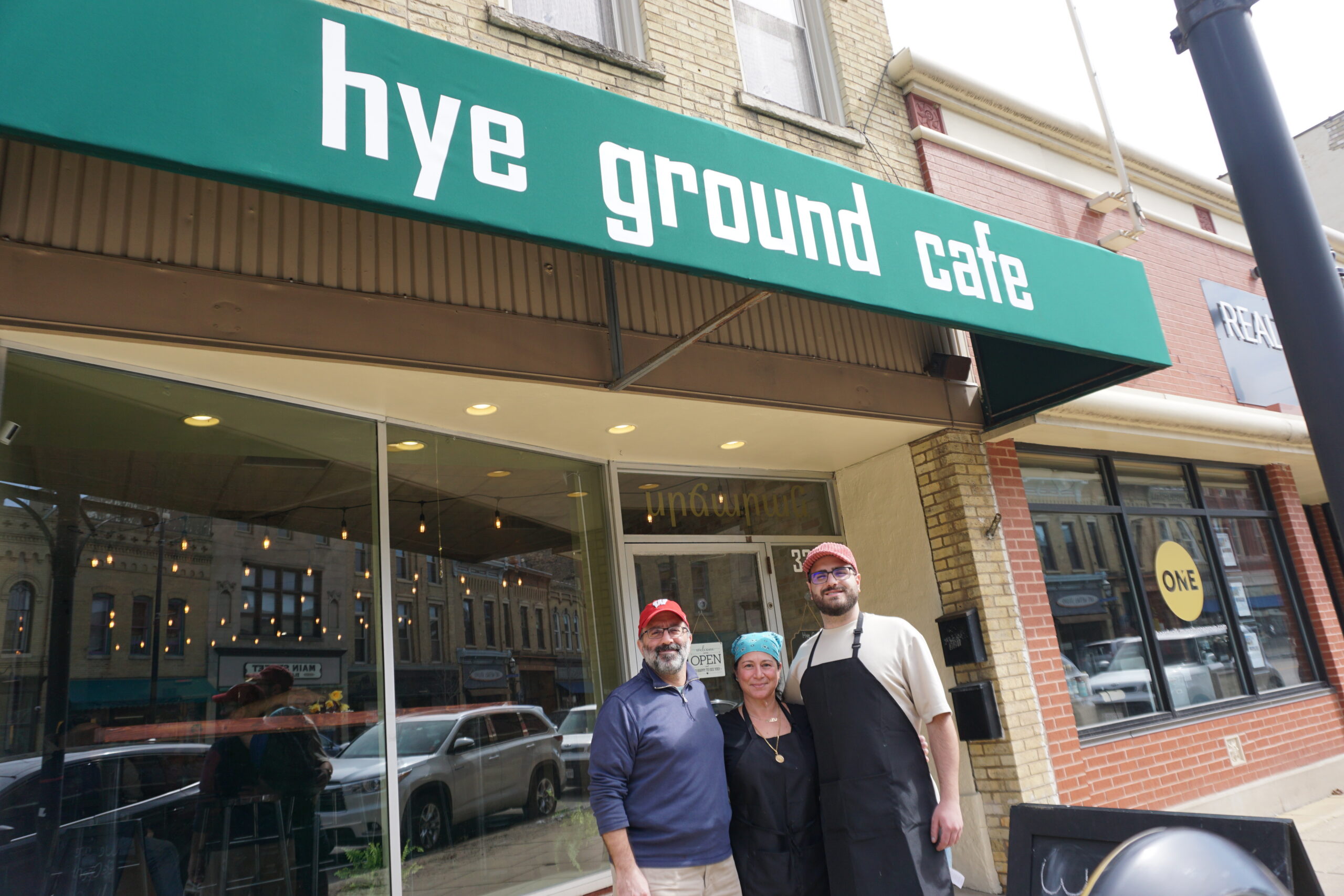
Hye Ground Café opened in historic downtown Racine. Yes, Racine, Wisconsin—which may make it even more newsworthy than any of the aforementioned locales. While Racine may not have the numbers of Los Angeles or New York, its Armenian community is every bit as proud of its heritage and unique blend of Armenian-American diasporan culture.

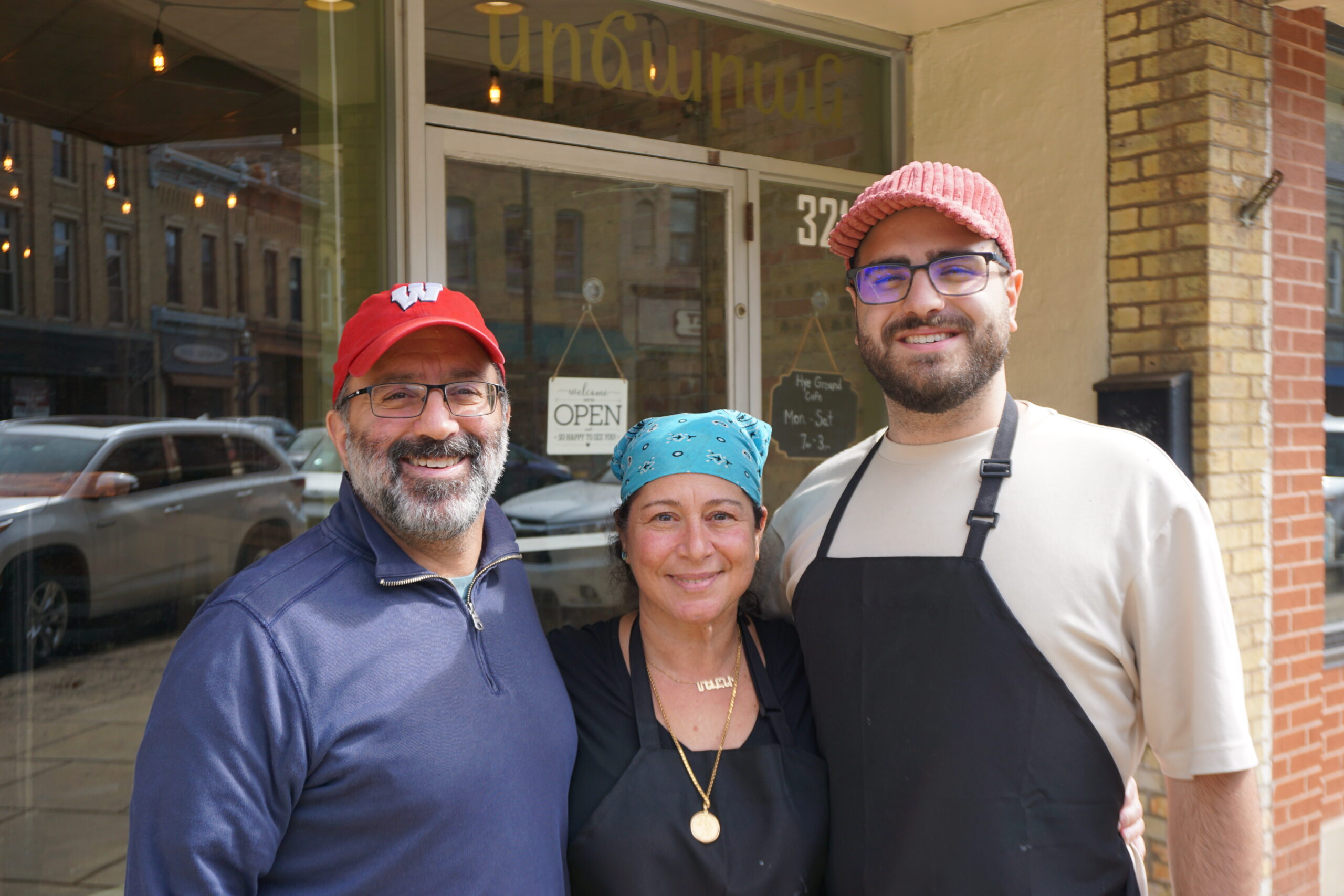
Hye Ground Café is the creation of Ari Antreassian, John Buchaklian, Melanie Buchaklian and Dr. Nick Akgulian. Ari, John and Melanie are the proprietors, and Nick owns the building in which the café is located. They all got together and decided that downtown Racine needed a good local coffee shop—with an Armenian theme. They wanted to preserve and showcase the Armenian presence and culture in Racine, which most locals experience only twice a year at two church picnics: St. Hagop’s Madagh Picnic and St. Mesrob’s Armenian Fest. 


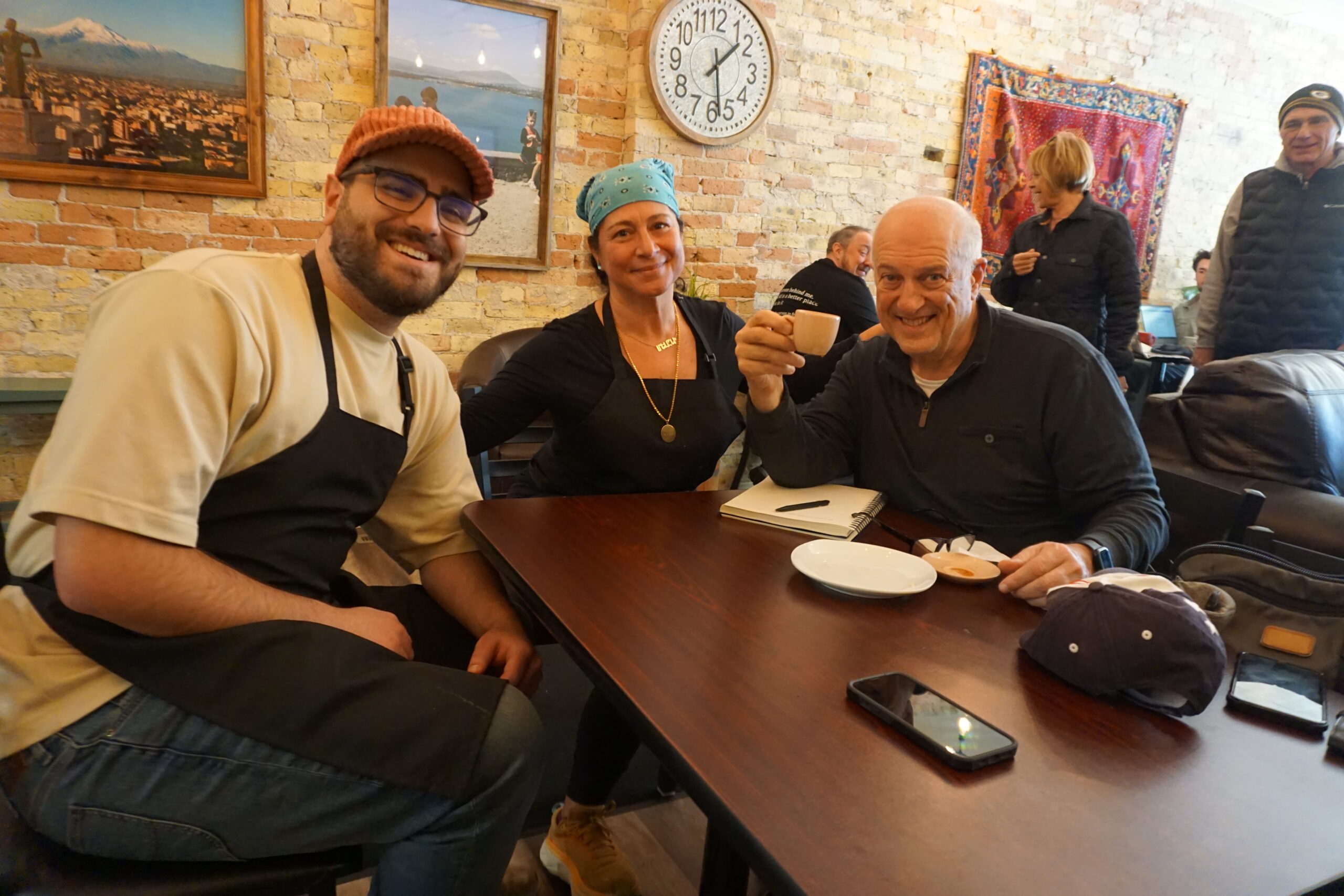
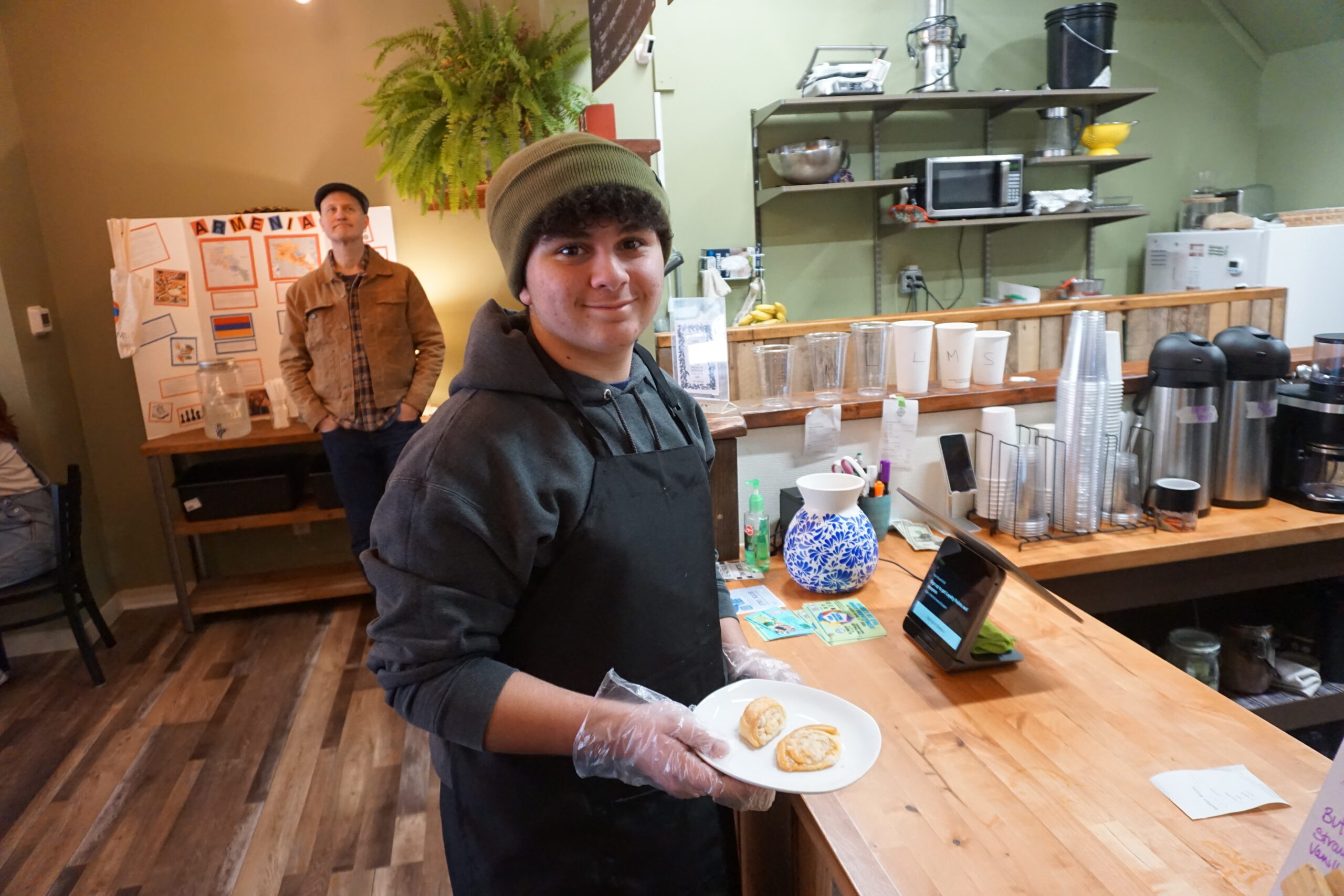
Ari, Melanie, and Mark

They also hoped to honor and recreate a modern version of the agoumps and srjarans their grandparents and great-greatparents established to preserve a bit of their lost homelands after resettling in Racine—recreating the agoumps from 100 years ago. It is a beautiful sentiment and a lovely vision for this unique business in the heart of the Midwest.

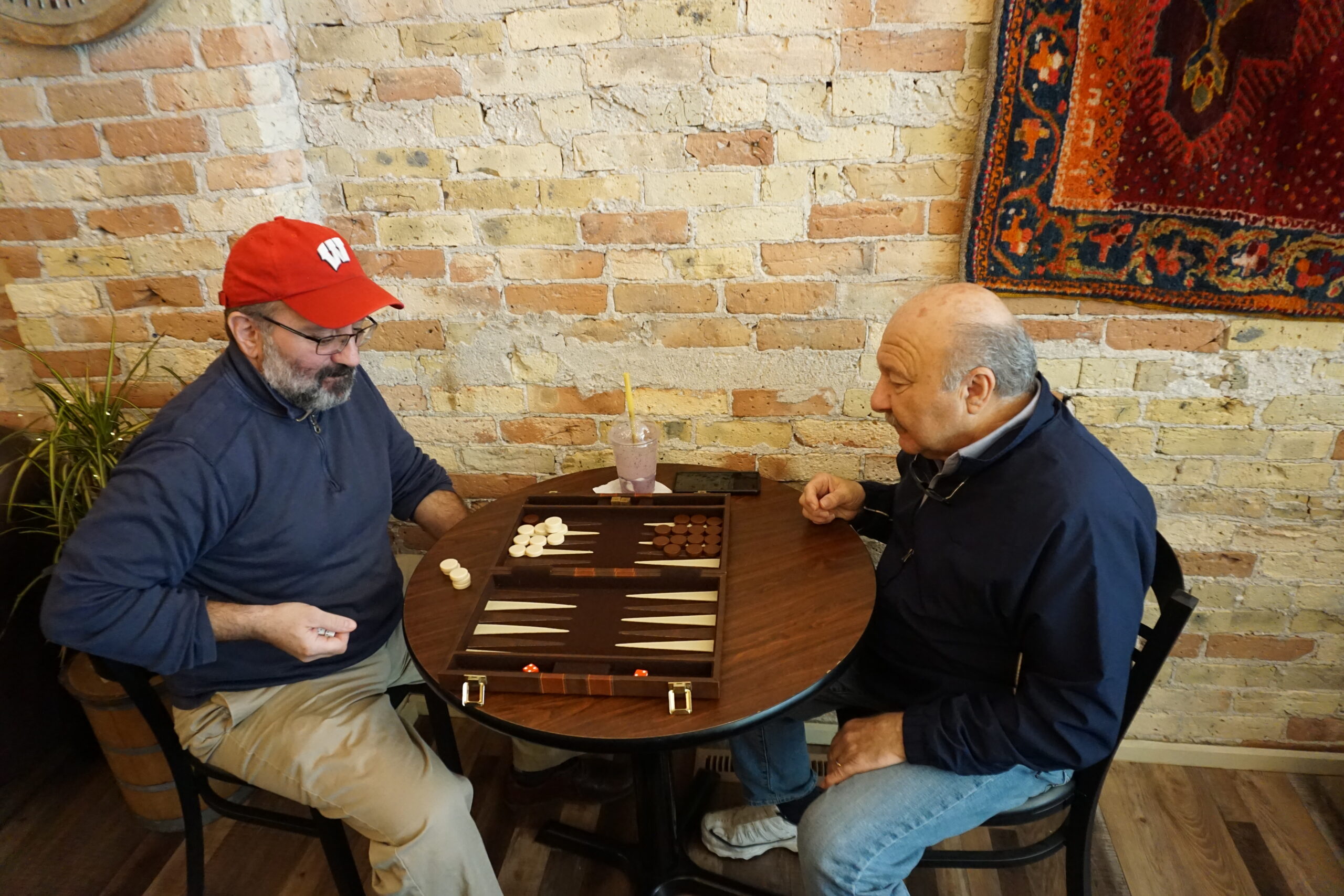
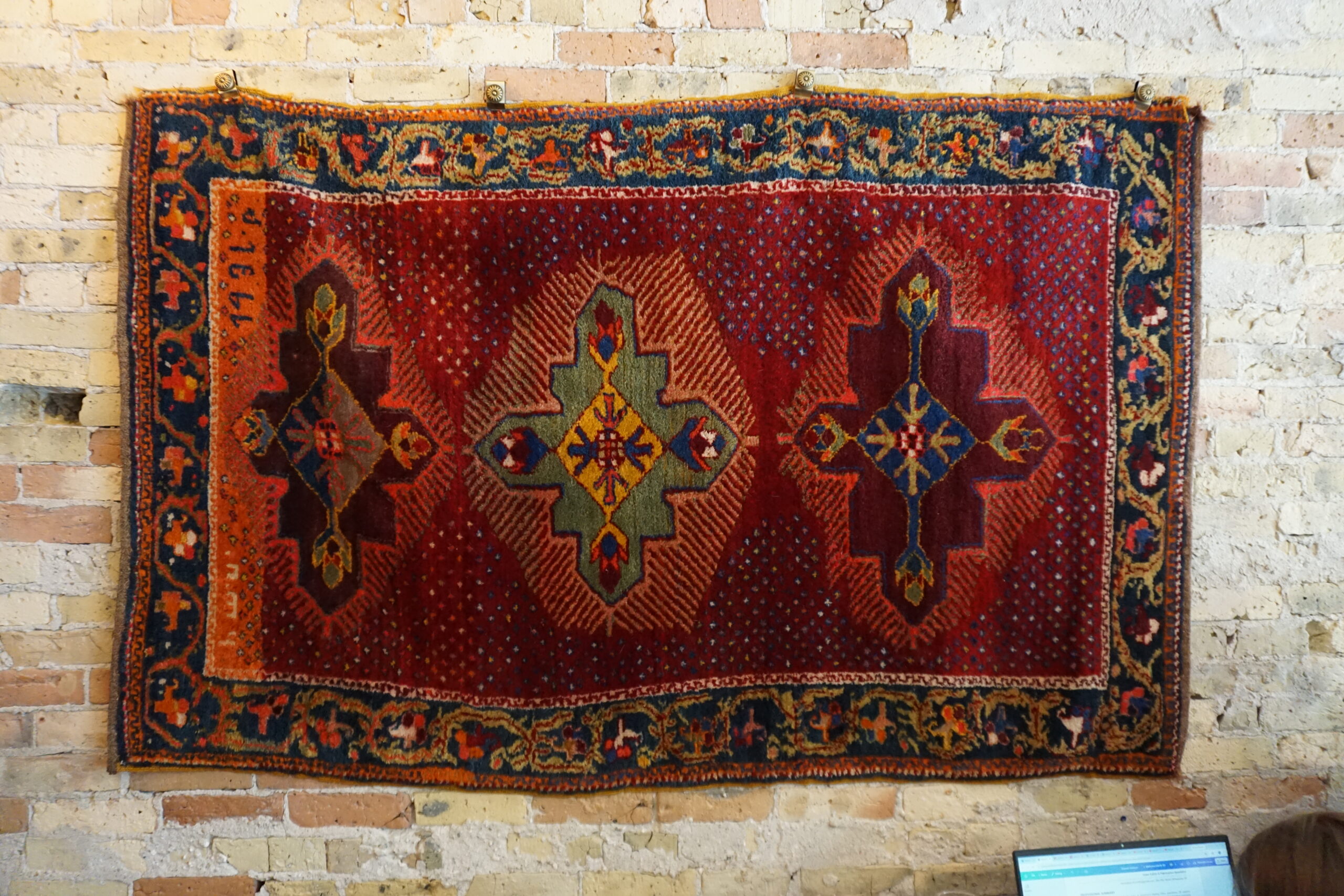
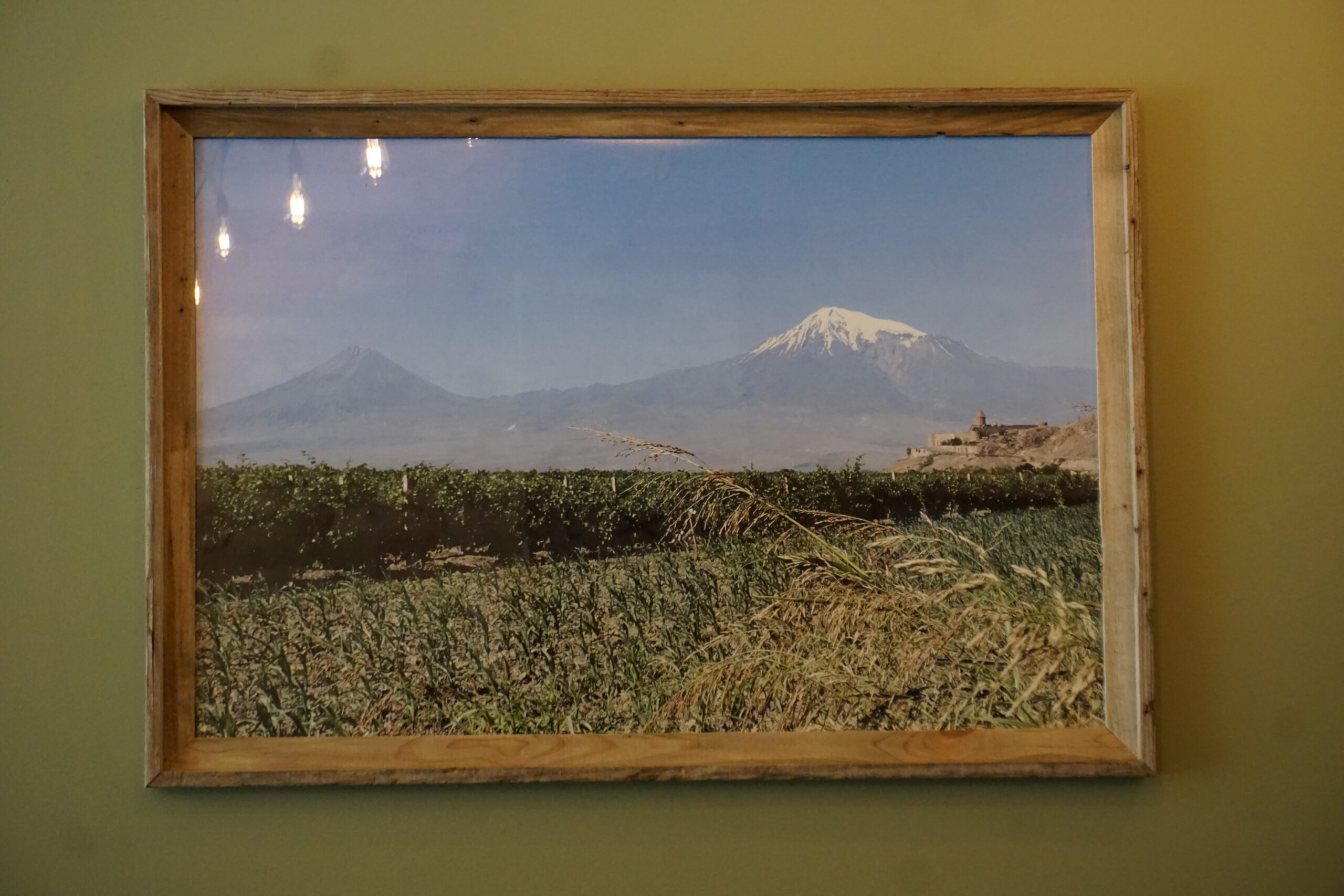
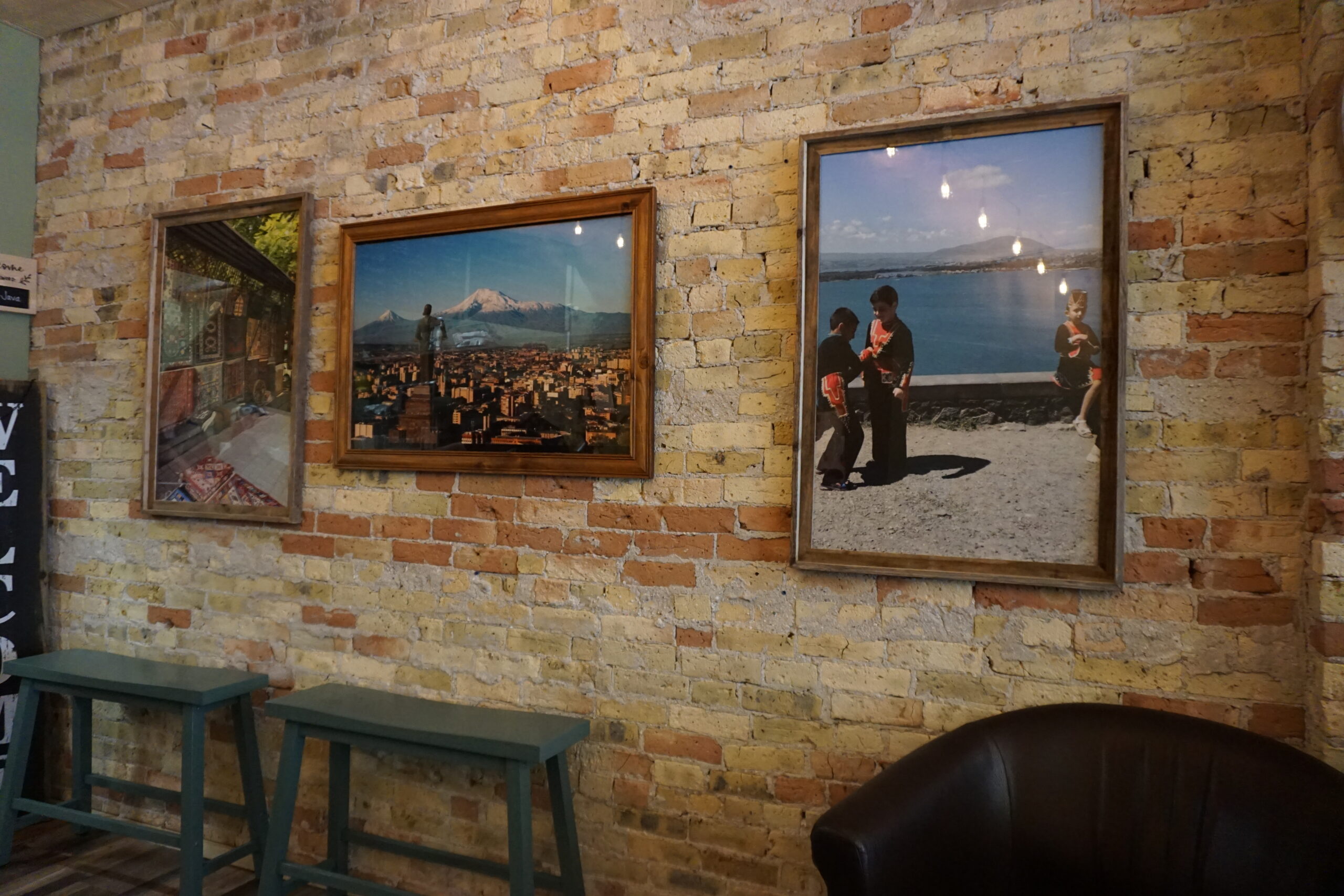
With that vision in place, Ari, John and Melanie got to work bringing Hye Ground Café to life. They cleaned and refreshed the space and decorated it with photos taken by Melanie during Fuller Center for Housing trips to Armenia to build houses. One of the rugs was brought back many years ago by Melanie’s mother, Penny Giragosian. Wanting a place where people would stay and socialize, they created a warm and inviting setting of tables and couches reminiscent of the coziest urban coffee shops in Chicago and Milwaukee. The have tavloo, chess and other games for patrons to use.  


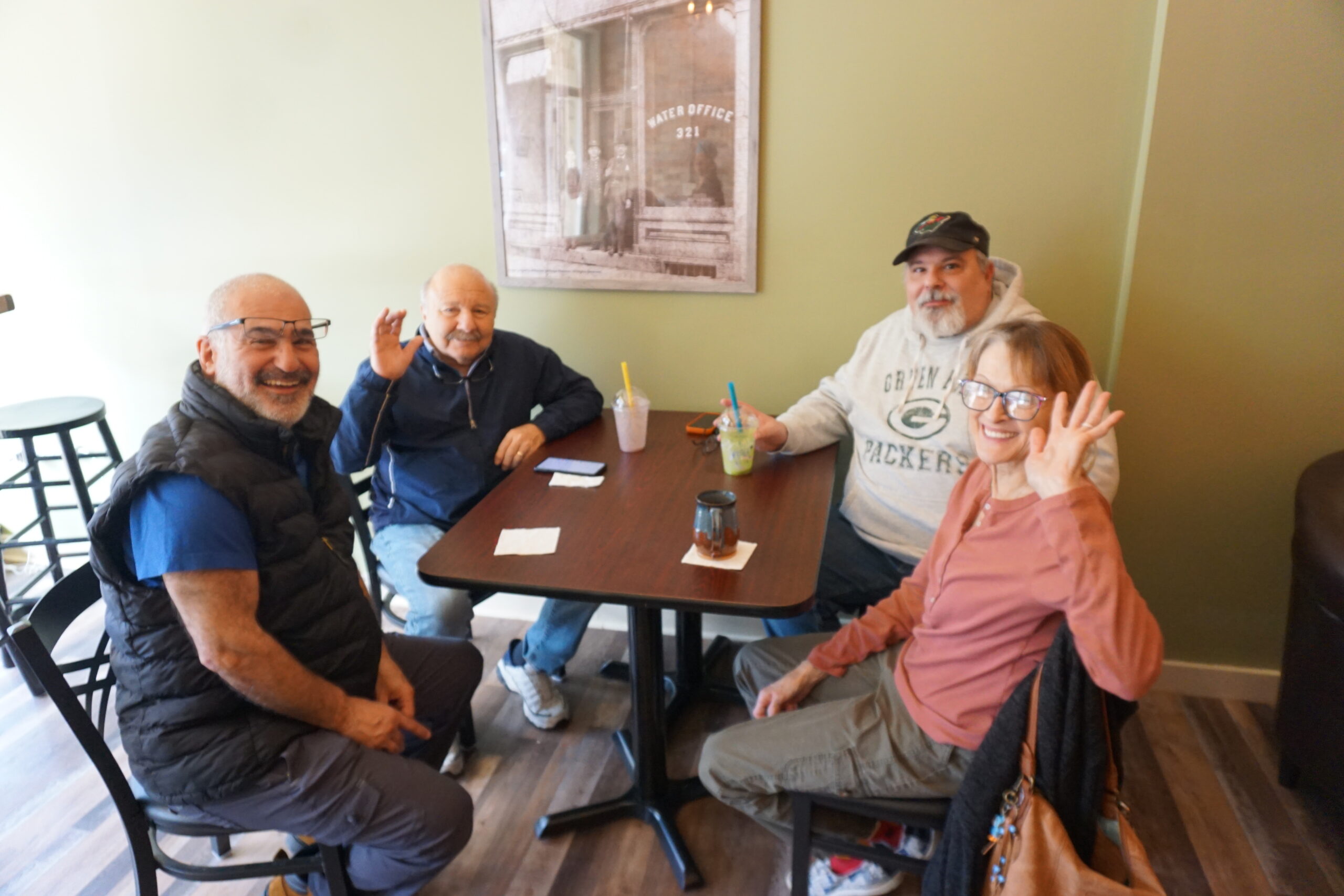
During the week, Ari largely runs the café. Melanie stops in every morning, and John joins on the weekends. They are a good team, well connected in the community and are excited to grow their business. There was steady traffic the Saturday I visited. Patrons and workers alike seemed to know one another well. Among the regulars I met were Mike Charkoudian, Abe Ouzounian and Joe Gabrielian—Abe and Joe having also participated in Fuller trips to Armenia. 

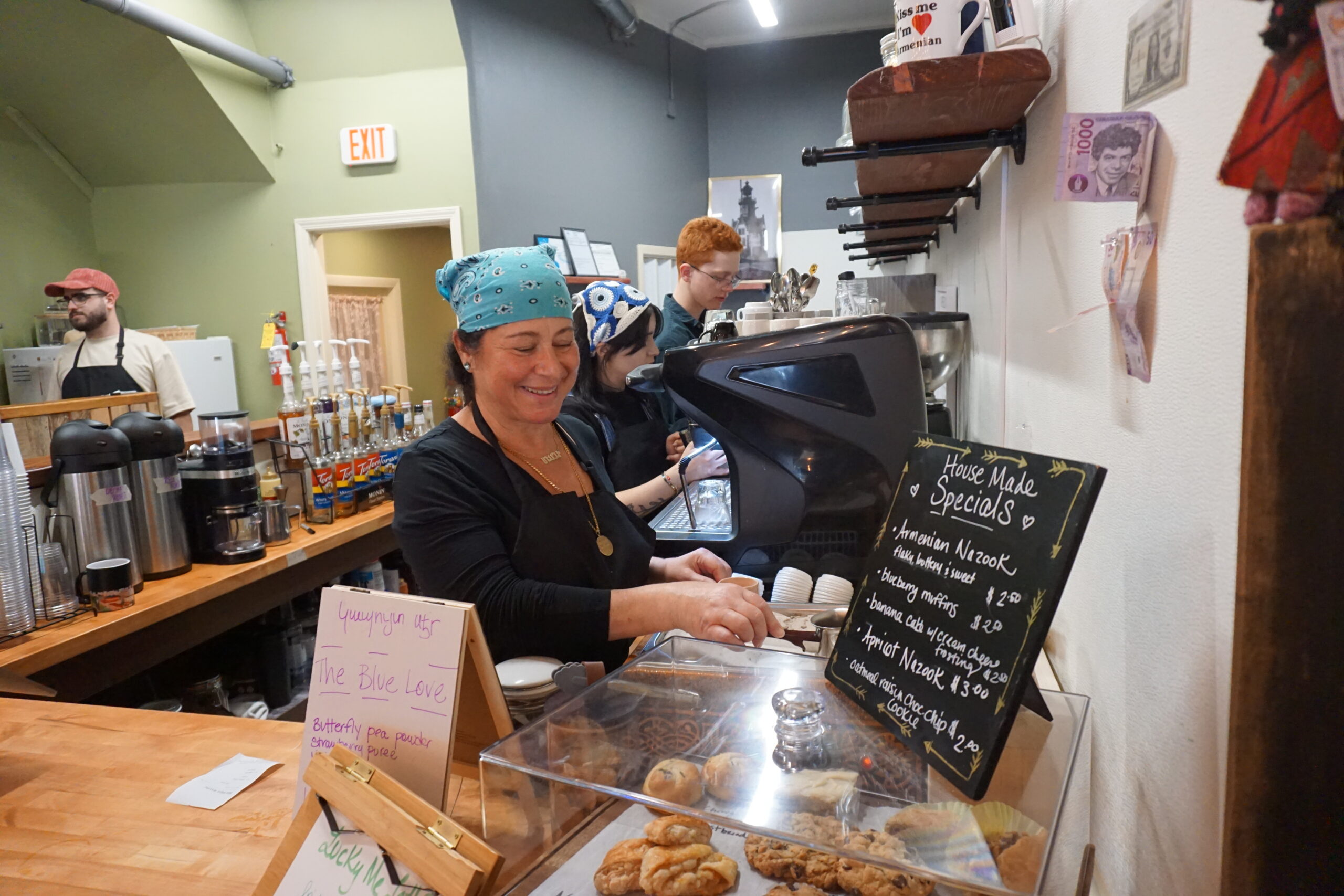
Melanie was inspired by a set-up she saw in Armenia, where coffee is prepared on hot sand heated by an electric burner. This method slowly brews the coffee at a gentle boil, rather than a full boil, allowing a thick and foamy crema to form. They duplicated this process at Hye Ground Café. The Armenian coffee was delicious, with a rich crema. 

Tavlu Players

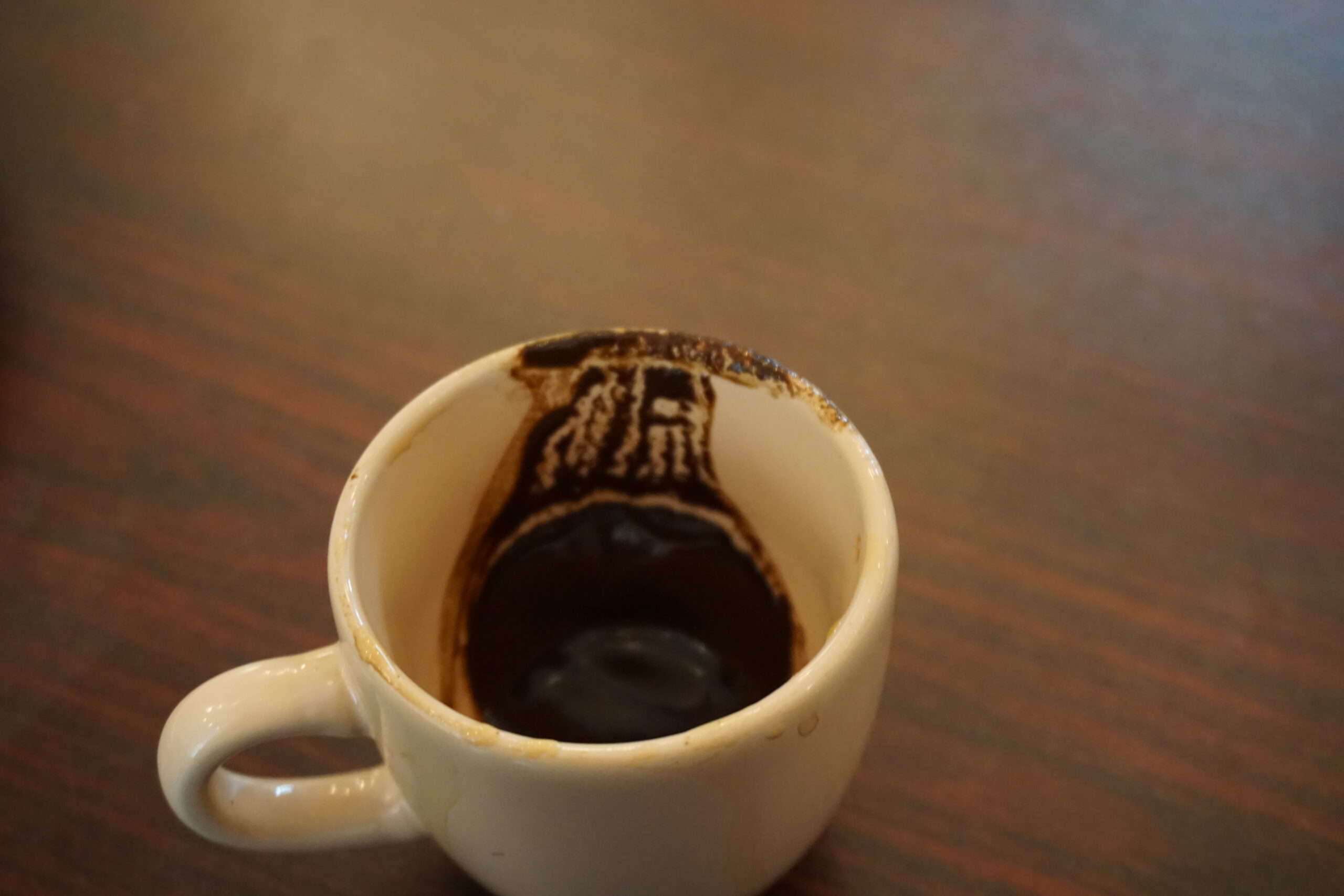
As one might expect in a srjaran, they also read coffee cups. When they read mine, they saw an “ayp” and “pen” in the cup, which we took as a positive omen, given that I was there to write this review.

Abe is not only a regular but also the café’s handyman. John joked, “He fixes things Abe-style. He fixes it and…it breaks again and he fixes it a second time.” They both burst into the hearty laughter of dear friends cajoling each other, and everyone within earshot joined in. This speaks volumes about the vibe patrons can expect when at Hye Ground Café.

My Coffee Cup

The food and sweets menu include bagels and choreg. One can get the bagel plain, with cream cheese and, as you might expect, with basturma. There is paklava and paklava à la mode. They also serve Armenian ‘S’ cookies and affogatos (like the café glace that is so popular in Armenia). Sweet specials, written on a chalkboard, vary day to day depending on what Melanie decides to whip up. 

These pastries are always Armenian and always homemade, based on family recipes rooted from Tomarza and Kharpert. The nazouk comes from a recipe by Melanie’s aunt, Adrienne Dodakian, while the khurabia recipe is from John’s aunt, Mary Djibilian. As a result, both are refreshingly unique—fresher and tastier than what one usually finds in Arab stores across greater Chicagoland. Since my visit, they have also added cheese boereg and an egg sandwich to the menu. 

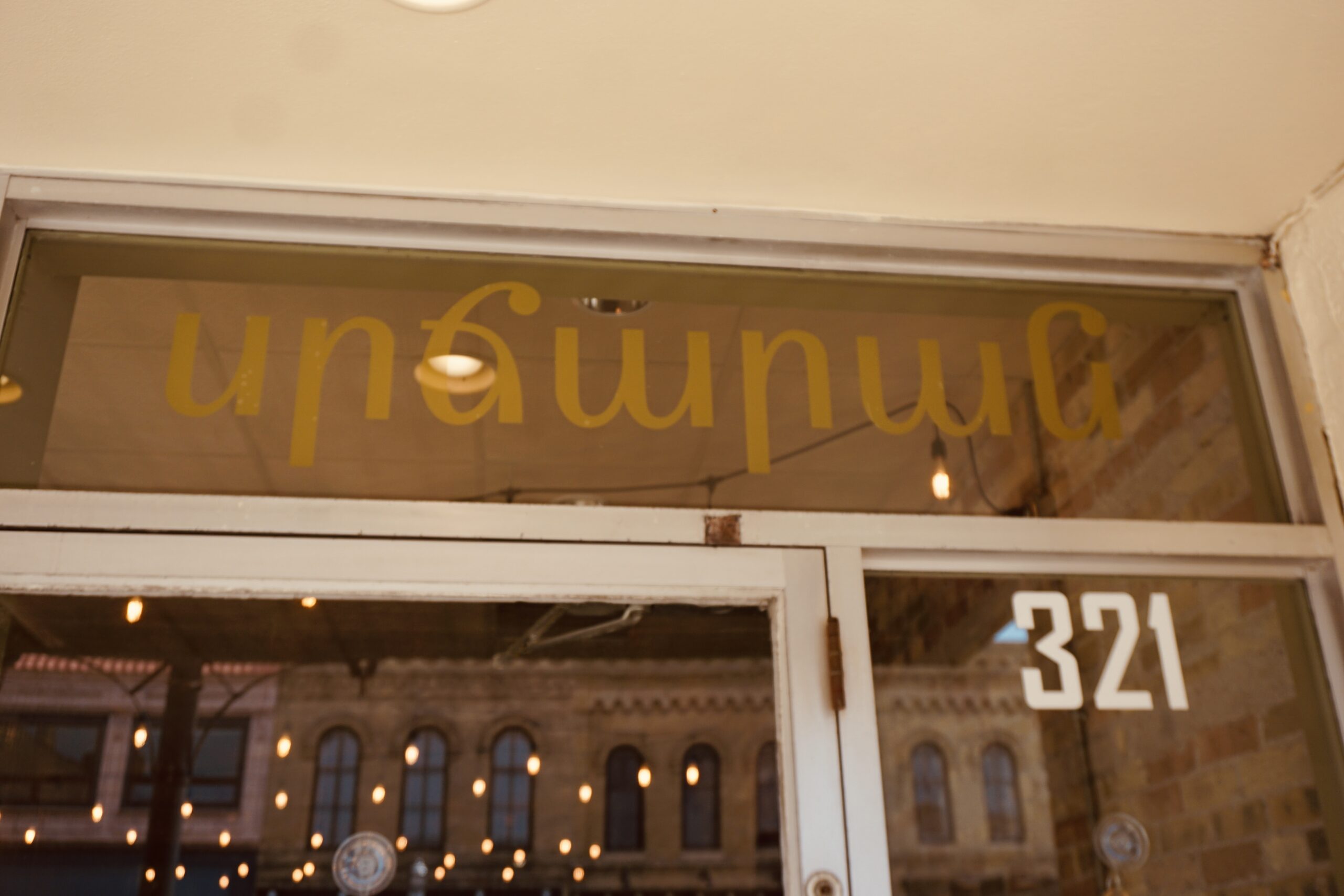
Srjaran Sign

With the arrival of spring and summer, Melanie, John and Ari are planning to have a Hye Ground Café presence at various local events, including popular farmers’ markets. They are also looking to expand their modest kitchen to introduce more Armenian offerings. Local Armenian musicians have offered to perform in support of the café. 

A grand opening is also planned, during which the local Der Hayrs will bless the café; a beautiful touch, as Ari is a tbir at St. Mesrob and John is a tbir at St. Hagop.

If you find yourself in or around Racine or southeastern Wisconsin, it is certainly worth stopping by this srjaran. You will feel at home…a Racine Armenian home.

John, Melanie, and Ari


Hye Ground Regulars


Haig Buchaklian


Melanie making Armenian Coffee


Armenian Coffee and Nazouk


Friday, April 24, 2026

TAYF: Sahrit Saffron


I went to my third TAYF Concert on April 23, 2026.  This one was at the Color Club Ballroom on Chicago’s Irving Park neighborhood.  The concert was titled Sahrit Saffron which is an “expansive cultural night steeped in SWANA (Southwest Asian and North African) roots and rhythms". The theme and the concert sought to evoke the warmth and light of saffron, acting as a celebration of existence, tradition, and cultural preservation. 

In light of the wars in Gaza, Lebanon, and Iran, the notions of existence, tradition, and cultural preservation are much more serious and precious.  This did not escape the producer and musicians of TAYF as they crafted the concert pieces and presentation.  The first half of the show was more somber and lamenting.  Songs, poems, and dances of lament is something that many SWANA cultures, sadly, have perfected and created in great numbers due to the history of the region.  The second half of the concert was more hopeful which is, of course, what buoys these same cultures to persist, honor traditions, and embrace their cultures.  TAYF delivered all this most in a beautifully crafted concert.

I have attended three TAYF concerts.  The first was their inaugural concert at the Old Town School of Music.  The second was in October of 2025, TAYF: From Ash to Bloom.  All three concerts were wonderful and enjoyable.  The group has evolved and grown with each concert.  In the concert last night, they took it to another level entirely.  I was really blown away.

They were in one word tighter.  In few other words, they were more comfortable on stage.  Tighter and more comfortable with each other, being on stage, and the music is part of the formula for musical excellence.  The arrangements were wonderful, highlighting each and every performer.  The interplay of the vocalists in leads, back-ups, and harmony was very well done.  The meld of music and Phaedra’s improvisational dancing was perfectly in-sync. The group was noticeable tighter than the other concerts I went to.  There were zero mistakes that I noted.  Everyone seemed more confident and they were not only ready for the stage last night.  I also believe they were ready for the recording studio and bigger stages. 

 TAYF  members at the Sahrit Saffron Concert:

  • C Mikhail – Bass, Vocals           
  • Sham Abyad –Vocalist
  • Karl El Sokhn – Guitar, Riq, Drums, Vocals
  • Dr. Aliah Ajamoughli, PhD – Cello
  • Phaedra Darwish – Flute, Vocals, Dancer
  • Dr. Shayna Silverstein – Violin
  • Yasmeen – Dancer
  • Pan Fayang – Guest flute, ney 

None of this happens without a lot of hard work and practice.  While the credit goes to the ensemble, the driving force and creator of TAYF, C Mikhail, clearly deserves a lot of credit.  C sets the tone, creates a beautiful culture for the group that nurtured and sustained their dedication to the group, and arranged all the songs except one for this concert.  Their arrangements were impressive in terms of fullness and texture.  I was most impressed by the way C highlighted the talents of Aliah, Shayna, Phaedra, and Pan that were notable in various passages throughout concert.  My ears perked up to very noticeable lush cello lines, soprano violin riffs, and beautiful flute adornments.  This kind of arranging added so much color and intricacy to the music.

 Here is the musical line-up for the evening.

  • Morghe Sahar
  • Hadi ya bahr
  • Ya msafer wahdak
  • Ala Tariq
  • Kifak Inta

  • Intermission

  • Dak khilkeh
  • Shou hal ayyam
  • Baatilak
  • Talfan Ayyash
  • Ayshe wahda balak


I was impressed with C’s vocal skills.  For the opening musical piece, C sang Morge Sahar, a song regarded as an ‘anthem’ against injustice in Iran and the signature piece of the famed Mohammed Reza Shajarian.  C sang it in Farsi, not a language they are fluent in, while playing the bass.  It was beautiful.  C’s bass playing was also showcased in an engaging bass taksim.  C and Sham teamed up for a beautiful lament of just voice and bass.  It was very moving, maybe the highlight of the first half of the show.  Karl sang two songs and has become something of specialist in singing in the style of Ziad Rahbani.  Both Karl and Phaedra sang chorus parts in other songs as well.

I cannot comment on TAYF without praising Sham’s amazing singing.  She is something very special and her rich vocal stylings, alone, are reason enough to come to attend a TAYF concert.  Abdo Timejardine-Zomeño, a clarinet player in the Middle Eastern Music Ensemble (MEME), praised Sham after a MEME concert with perfect sentiment: “I could listen to this Queen sing all night.”  Indeed!  To me, she is ‘the Fairuz of Chicago.’

Queen Yasmeen and Phaedra’s dancing added a beautiful visual dimension to the performance.  Queen Yasmeen danced elegantly and gracefully to recorded music to both kick-off and end the concert.  Phaedra danced, interpretively, to pieces played by the ensemble.  It was art music and dancing embracing Arab culture.      

The crowd of friends and fans absolutely loved TAYF.  Probably a third were MEME members.  Every member of TAYF either is currently in MEME or once was.  Everyone in attendance loved each and every music and dance offering.  They showed it with loud, sustained, and enthusiastic applause.

The entire evening was curated and produced by BIYA BIYA Productions founded by Yasmeen Zacaria Mikhaiel, another MEME member.  Yasi made the evening more than just a concert, they had a bazaar of local merchants and organizations with tables on the periphery of the concert hall, there was photo booth with a live photographer, and a DJ dance party after the TAYF concert.  It was all very well done and made for a great evening all around.  BIYA BIYA Productions and TAYF are about the same age as both were founded just a few years ago.  Their teaming up was natural, and their growth has had the same trajectory.  This was the best TAYF to this point.  This was the best curated and produced TAYF event as well.  TAYF has solidified as an ensemble and were more natural and comfortable on stage, the same could be said about Yasi as well from her opening remarks and to how they interfaced with the audience, band, and staff.  I look forward to seeing this partnership grow and blossom.

The future looks very bright for TAYF and BIYA BIYA.  I will be the first in-line to buy a TAYF CD and, who knows, maybe even a TAYF World Tour 2028 hoodie.

=== Photos ===

Queen Yasmeen


Sham


 Phaedra


===

Click here more information on: 

This TAYF:  Sahrit Saffron event including bios of the musicians

BIYA BIYA Productions

Sunday, April 19, 2026

Marianna Gevorgyan: A virtuoso voice of the Armenian kanun


First Published in the Armenian Weekly.

     We all have friends or acquaintances we have never met and only know through social media. We also have select lists of celebrities we follow online. Marianna Gevorgyan is both for me. First and foremost, she is a world-renowned master and virtuoso of the Armenian kanun. I delight in viewing the reels and videos of her performing. Marianna has become a social media friend as well, primarily because she responds to and engages with people like me who comment on and admire her musical talents. She is also gracious in her likes and comments on my musical posts.

     Marianna was born in Yerevan in 1986 and began her musical journey at the Alexander Spendiaryan Music School. She pursued higher education at the Yerevan Komitas State Conservatory, completing her bachelor’s, master’s and postgraduate studies with high honors. Her dedication to the kanun has been the defining focus of her career.

     The Armenian kanun (also transliterated as kanon or qanun) is a trapezoidal zither that is centuries old. It is a cornerstone of Armenian folk and classical music, distinguished by its bright and resonant timbre. Unlike many stringed instruments that use wooden soundboards, the kanun’s bridge rests on goat or fish-skin membranes, producing a sharp, percussive tone that carries beautifully in both intimate ensembles and orchestras. 

     The Armenian kanun has 26 courses of three strings tuned to the same pitch, for a total of 78 strings. The instrument is played with two picks, one on each forefinger. The picks are held on the fingers by metal bands and are traditionally made of tortoiseshell (though modern ones use horn or synthetic materials), producing a sharp, clear attack. Virtuoso players like Marianna use all 10 fingers to play complex chords, arpeggios and full-bodied strumming.


     While the right hand plucks, the left hand frequently moves the small metallic levers, or mandals, near the tuning pegs to change pitch mid-performance. This allows the player to access accidentals and modulate between musical keys.

     In Armenia, the kanun is primarily played by women. They often begin at a young age, and many have seen videos of young girls playing with great intricacy and precision in unison. Marianna was one of those young musicians who has blossomed into an internationally recognized master of her instrument.

     Don’t just take my word for it. Kanun player and recording artist Ara Topouzian had this to say about Marianna: “Marianna doesn’t just play the kanun—she reveals its full voice. With striking versatility, she moves seamlessly between styles and moods, carrying a sound that resonates far beyond the stage. She is, without question, a pride of Armenia.”

     Duduk and clarinet virtuoso Mher Mnatsakanyan was equally exuberant in his praise of Marianna’s talent: “Marianna Gevorgyan stands among the most respected voices of the kanun today. Through her artistry, dedication and deep understanding of tradition, she continues to elevate the instrument, inspiring audiences and musicians alike across generations.” 

     Marianna has a long list of awards that includes:

  • Global Icon Award (Music), 2025: Honored as the sole representative of Armenia at an event in Athens, Greece, organized with the support of UNESCO, UNICEF and the United Nations;
  • World Folk Vision, 2020 Grand Prix: Won the top prize in the “Music of the Peoples of the World” category, competing against nearly 4,000 participants from 115 countries;
  • Music Ambassador Award: Received first prize at an international competition held in India.

     Marianna is a wonderful player. Her virtuosity is enhanced by her grace, natural beauty and elegant gowns. She has been interviewed in the media and appeared on magazine covers around the world. She is also a cultural ambassador for Armenia. Artists around the world have painted portraits of her. She has inspired poets (including yours truly).

     Follow Marianna on social media and enjoy her YouTube channel @mariannagevorgyan.

Դուն Էն Հուրին Իս (Doun En Hoorin Is), penned Feb. 12, 2026

Floating gracefully upon
the pluckish tendrilities,
the babbling brookiness,
the very Armenian kanun,
the effortless emanation
from Marianna’s heart and soul,

I am there, in Hayastan,
in Amberd, at Saghmosavank,
nowhere near Yerevan,
in the small villages,
just imagining, channeling,
our tarn upon tarn
centuries older than old
sacred spirit vibrating
in our very genes.

The poem is best read listening to this rendition of the Sayat Nova song, which is the title of the poem.


Saturday, April 18, 2026

Tigran Hamasyan captivates Chicago audience in University of Chicago performance


     Originally published in the Armenian Weekly.

     On Friday, March 13, we ventured to Hyde Park on Chicago’s South Side to attend a concert featuring Tigran Hamasyan and Third Coast Percussion (TCP). It was the second time we had seen Hamasyan perform. The first was two years earlier, again in March, which featured intense jazz in a hip concert hall in Lincoln Park. This performance, by contrast, took place in the more traditional, 400-seat performance hall at the Reva and David Logan Center for the Performing Arts at the University of Chicago.

      The audience also differed noticeably. At the earlier concert, the average age appeared to be around 30. This time, it was closer to 50. The concert quickly sold out, prompting the addition of a second performance to accommodate demand.

     The first half of the program featured Chicago’s acclaimed TCP, a Grammy Award-winning percussion quartet and composer collective founded in 2005. The ensemble has become a leading force in contemporary classical music, known for its “vibrant” (The New Yorker) and “hard-grooving” (The New York Times) performances.  


     The opening piece, Etude No. 1, was written by Hamasyan and arranged by TCP for percussion quartet. Hamasyan joined the ensemble for the performance. The piece was light and airy, with Armenian melodic phrases as the weft to the jazz warps. The interplay of piano, vibraphone and marimba created a rich musical tapestry of point and counterpoint.

     TCP continued with three additional selections, each commissioned with the support of benefactors. The first, Lady Justice / Black Justice, The Song, was composed by Jessie Montgomery and inspired by Ori G. Carino’s painting Black Justice. Montgomery described the work as “a deep collaboration and artistic symbiosis” between composer, ensemble and visual artist. “I am privileged to call them friends in music and in life,” he stated.

     The next piece, Orion, by Brazilian composer and guitarist Sérgio Assad, was written in celebration of TCP’s 20th anniversary in 2024. Structured in five movements, it showcased the ensemble’s virtuosity: Sean Connors, Robert Dillon, Peter Martin and David Skidmore performing with precision and dynamic range.

     The final piece of the first half, Sonata for Percussion, was composed by Hamasyan in 2024. I loved this piece. While structured in a classical sonata structure, it was done Hamasyan style, infusing Armenian motifs and melodic notions into a jazz form fluidly and seamlessly. 

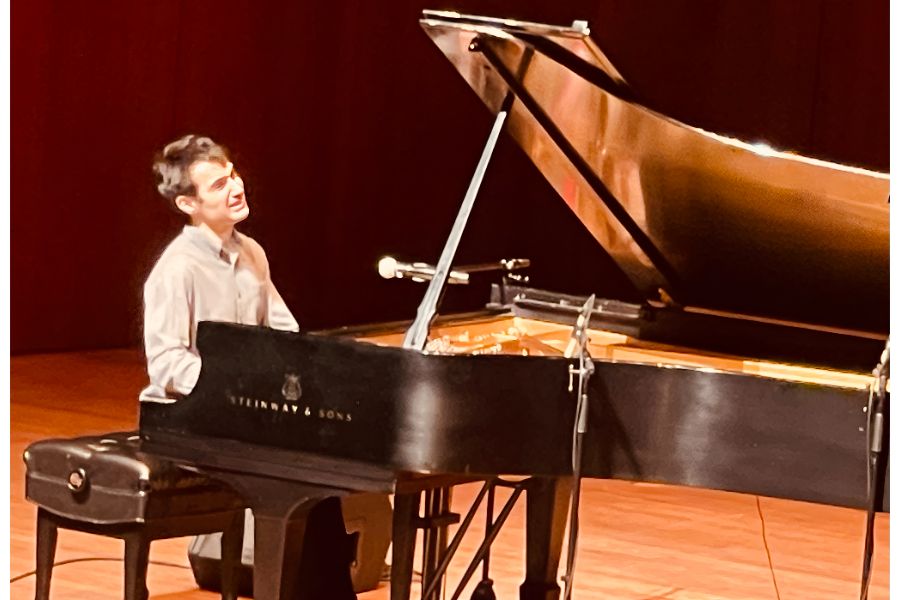
      After intermission, the program shifted to Hamasyan’s solo performance. Taking the stage to vigorous applause, he sat at a concert grand Steinway and mesmerized us for about 45 minutes.

     The program listed “solo selections,” though it was not always clear where composition ended and improvisation began. I am not enough of a student of his work to know the answer to this question. What was clear, however, was the intimacy of the experience. Hamasyan’s playing moved fluidly between delicate, almost whispering passages and bold, percussive intensity. Armenian themes surfaced throughout, grounding even the most exploratory moments. It was soft and delicate sometimes and bold and edgy at others.
 

     What I enjoyed most was what I will call his aghpuir moments—named for the Armenian word աղբյուր, meaning “spring.” In these passages, often two-thirds of the way through a piece, Hamasyan would shift to the highest register of the piano, leaning over the keyboard, his eyes nearly level with his fingers. There, he would improvise fragments of Armenian melodies in a bubbling, fluid style, reminiscent of a natural spring or babbling brook, hence the Armenian word aghpuir.

      Following the performance, we met several Armenians, most of whom were from the Republic of Armenia. Some of them had driven two or three hours to be there and planned to return home that same evening. Although Hamasyan did not come to the afterglow, having performed in the same hall, I knew where the green room was. My wife, Judy, encouraged me to go and try to meet him. I was a little hesitant because I have heard that Hamasyan is a very shy person, but I did go and he was very gracious, taking a photo with me.

     Tigran Hamasyan is an immense talent—a national treasure for Armenians and highly regarded by a large non-Armenian following around the world. If you are unfamiliar with his work, find him on YouTube and listen to his music. And if he performs in your city, I wholeheartedly encourage you to go. I am most definitely a fan. 


Sunday, March 15, 2026

A Beautiful Musical Day


The MEME Takht Ensemble


Saturday, March 14, 2026, was a beautiful day for music.  I had two engagements, both gratis, and both were fun and uplifting.

The first was a celebration of Nowruz at the University of Chicago’s Institute for the Study of Ancient Cultures (ISAC).  Nowruz, meaning “new day,” is the celebration of the new year which, 3,000 years ago in Zoroastrian Persia, was celebrated on the first day of Spring, the vernal equinox.  To this day, Nowruz is still a significant holiday, a national holiday, in present day Iran.

The Nowruz celebration at the ISAC is a family oriented craft and educational event.  It ends with members of the University of Chicago Middle Eastern Music Ensemble (MEME) giving a concert of Persian, Arab and Turkish music.  I have participated in this event maybe a half-dozen times in my 12 years with MEME. 

MEME has grown dramatically in size over the years.  At the concerts this year, we have 40-50 musicians and a choir of 20-25, depending on the concert.  We have only taken a takht ensemble (Arab for a small musical ensemble) to the Nowruz event as the stage is small.  This year we had 9 musicians and 6 singers.  It was the largest group we have ever taken to this event.  Only the musicians were on stage, and the choir was in front of us, stage right.  We introduced the instruments and spoke about MEME and our next concert on May 23rd.  We played two Persian songs, one Turkish, two Arabic, one Kazakh song, and a song that has verses in Turkish, Arabic, and Farsi. 

There were two practices for this concert.  The first was on the Thursday before, but a little more than half of us were able to be there.  The three of us playing Middle Eastern Instruments were not able to attend that practice.  The second was two hours before the concert.  We walked into that practice not feeling we were ready for the concert, but after two hours of focused work, we were ‘ready for prime time.’

We had a grand time practicing and performing.  The audience of 120 or so loved our performance, maybe almost as much we enjoyed playing.  It was a lot of fun and we were tight.  We were energetic for the lively selections and soulful for the laments.  It was a great joy to play with my MEME friends. 

If this were the only event, it would have been a beautiful musical day.  But, as soon as we were done, I had to jump in the car and drive to Glenview to attend and provide some music at a very special birthday celebration. 

The birthday girl, MariAnne, is a lovely lady who was turning 90.  Her parents survived the Armenian Genocide and came to America.  The lived in a part of Western Armenia, the Ottoman Empire, where Turkish was the prominent language.  They brought a love for Turkish music with them.  MariAnne came to have the same love for the music.  I met her when I first moved to Chicago in 2006.  She was at night club we were playing at and asked if would play what turned out to be some of the same music I love.  I gladly played, and sang the songs.  We became good musical friends.

Her family planned a birthday party at the senior care facility where she was living.  It was in small party room at the facility.  The party was organized by her grandchildren for an intimate gathering of family and close friends.  I was delighted when asked to come and play some of her favorite songs, I immediately agreed to do it.  But, I knew I only had an hour to there.  Driving through the often intense downtown traffic could take an hour or up to two hours.

Luckily, it only took an hour to get there.  I ran up to the room and my friend John, who was to join me on guitar, was already there.  MariAnne’s grandson had a very nice sound setup for as.  I began with a taksim.  MariAnne lit up.  I went into her favorite song, Kadifeden Kesesi, and I delighted to see her singing along with me sitting right in front of us.  She sang every word of every verse.  She was so happy.  After a few more songs, they brought out the cake and we played and sang happy birthday.  At similar parties, I would go into another Turkish song, Tin Tin Tini Mini Hanum.  I did so again and MariAnne’s her daughters and granddaughters got up and danced in a circle around her.  It was a joyous moment for everyone! 

What a beautiful musical day.

Wednesday, March 11, 2026

Richard Haig Gavoor (December 7, 1930 – March 10, 2026)


We were all saddened when my cousin David informed us that his dad, my uncle and Godfather, passed away.  This week he asked that we send him anecdotes and memories that might “reveal the kind of person he was (i.e. personal qualities and characteristics).  The idea is that people who didn't know him would be able to read these and feel as if they did.”

Richard Gavoor is my father’s younger brother.  Most people he knew in his adult and work life called him Dick.  In the family, we knew him by his childhood nickname, Buddy, and to my sisters and me has Uncle Buddy.  My father Aram Gavoor was Sonny.  To their Armenian contemporaries, it was always Sonny and Buddy.  Their older sister was Seeran.

We never lived in the same city or state.  We lived in Detroit.  Uncle Buddy and his family lived first in St. Catherines, Ontario and then Summit, New Jersey.  While we never spent enough time together, it was always a pleasure to be with Uncle Buddy, Aunt Perk, and our cousins Susan, Robin, and David.  

Uncle has been a big influence in my life. My mother was a major assistance in this regard.  She would always motivate me with Uncle Buddy’s example both in terms of education and his subsequent success in his career in corporate accounting and finance.  In fact, mom wrote this perfect heartfelt sentiment in a group chat earlier today. 

There is an Armenian saying, not necessarily when someone passes away, “ Varskud Gadar”.  Translation: A job well done.   

To me this says it all for Buddy in every way.

He achieved his life’s goals by working diligently and maintaining his high standards which guided him to success.

He was a model son, brother, husband, father, grandfather, uncle, and devoted dear friend to many.

 Here are a few memories that came to mind today when I learned of Uncle Buddy’s passing. 

He once told me a story when he was a boy.  They used to spend the summers on the family farm in Andover, MA.   He was working in the field, and he slipped or somehow fell, and the tractor ran over his legs.  He related, “I immediately jumped up and ran fast, screaming ‘My legs are broken.’  But there was so much hay on the soft ground, that I wasn’t hurt at all.”  He was chuckling, in his patented wry manner, at his reaction to what might have been more tragic. 

My grandmother one told me another story of the two boys, Sonny and Buddy.  My dad and some friends were playing football in the street.  Uncle Buddy wanted to join in, but my dad wouldn’t let him for some reason.  Uncle Buddy then went into the house and called the police.  He claimed to be the Armenian neighbor who was sitting on his porch across the street watching the boys play and complained about the racket.  The police came and broke up the game.  Uncle Buddy sat on his own porch across from the oblivious neighbor and watched the whole scene unfold never saying a word.

Uncle Buddy was a lifelong athlete and devotee to health and fitness.  He was quite a sprinter both in college and in the Armenian Youth Federation’s renown Olympic Games held every Labor Day Weekend since 1933.  He and my dad were part of the famous Watertown Gaidzag team of six that won the 1953 Olympics.  Uncle Buddy was named an Olympic King at the 1968 Games in Washington, DC.  Read more about the Watertown Six here.  

Buddy taking first and Sonny coming in thrid

I remember how graciously happy and proud Uncle Buddy was in the mid-2000s when his grandnephew, my son Aram, passed him on the all time high scorers list.  He was proud of his records and achievements but delighted that another Gavoor passed him up.

As mentioned earlier, Uncle Buddy was a great example career wise for me.  We were all proud of his rise to comptroller at Nabisco based in Manhattan and then in New Jersey.  I remember when we visited the family in New Jersey and I got to see his commuting lifestyle up close and how he would return home in the evening, change his clothes, and rush off to his club to play tennis.  He was always sharply attired, a true Brooks Brothers man of those times.  I remember the awe I had for New York and that commuting lifestyle as a mere teenager.  I remember sitting with him and discussing the 1985 takeover of Nabisco by RJ Reynolds that he lived through and later became popularized in Tom Wolfe’s bestselling The Bonfires of the Vanities.

When he became older, Uncle Buddy took up golf.  As with most sports, he dedicated himself to it and became a pretty good player and a true devotee of the game. 

I remember how proud we both were when I took a position at Colgate-Palmolive in Manhattan in 1990.  I felt like I was emulating my Uncle Buddy and remember him congratulating me on having a ‘Park Avenue office.’

My Uncle was a very nice and considerate man.  He was a true gentleman and someone we could all emulate.  He had strong well-thought out views but never lorded them over others.  I admired that he was always willing to discuss and entertain different perspectives.  When asked for advice, he would give various options and their pros and cons but would never make the decision for you. 

Uncle Buddy loved his family and his extended Gavoor-Asoian clan.  He loved Armenian food and music.  I loved that when I played at Armenian Picnics in NJ he would come by to enjoy both the Armenian fare and my music.  I will miss him but relish these and other precious memories.

As we Armenians say, Աստուած հոգին լուսաւորէ (Asdvadz hokin lusavoreh), may God illuminate his soul.


Thursday, February 26, 2026

This Side of Fifty Anniversary Post


I started this writing project, This Side of Fifty, in February of 2002.  It began as a monthly e-letter that I sent to a list of family and friends.  In 2009, I moved it all over to this blog and began posting more often than just once a month.  This, is the second post of the Volume XXIII.  I have never published a book, but I have enough posts over the years for a book or three.  As noted in previous Anniversary e-letters and blog posts, this has been a most worthwhile and rewarding project.  I am also both amazed and very proud that I have stuck with it for so long. 

There were only 40 posts in Volume XXII.  That is the least number of posts since 2017.  What was the cause of that drop in productivity?  I wrote about it a twice last year in One A Day and A Lethargic July.  The lower productivity was due to a lethargy which I can attribute to my two knee replacements, the left one in January and then the right one in June.  The surgeries, which could be viewed as ‘routine,’ took some of the veritable wind out of my blogging sails.  I feel good and feel somewhat back to normal.  But at my age, any loss in concentration is a wee bit worrisome.

While my blogging numbers sagged, I wrote 55 poems during the same time period.  That was the most poems I have ever written in a year.  Oddly, it took me about the same amount of time to write a poem as it takes to write a blog post.  I am not sure I have a great explanation for this beyond it being the impact of two anesthesias somehow slowed down the prose part of the brain whilst unshackling the poetic lobe.  I do lament for not having more posts here, but I am pretty happy with my poetry blog:  Mark Gavoor’s Poetry. 

While I have no issue with putting my thoughts out there for all to read on this blog.  I am much shier about doing the same with my poetry.  Before, creating This Side of Fifty, I worried a bit about ‘putting myself out there.’  It was an unnecessary worry and I got over quickly.  When it comes to poetry, my lack of confidence has lasted decades longer.  Poetry is less popular and basically the domain of English professors around which I feel like a poetic poser.  Correction, I used to feel that way.  No more. 

Part of writing is to find one’s voice and then embrace and refine it.  I believe, I have a poetic voice and have refined it over the years.  I comfortable with it.  Heck, I am now happy, proud of it, and, indeed, embracing it.  I care about how others react to it.  But that is their right.  If I can learn from their criticism and refine it that is good.  Otherwise, in my current state of mind, it doesn’t matter to me.

There is a saying that ‘when one door closes, another opens.’  In this case it seems to be more like, ‘when one door closes a wee bit, another is blown wide open.’  In this case, it is a very good thing.


it's life you know

you texted a very 
simple thought
"it's life you know"
i started to type
and backspace and 
type and delete
again and once more

then...
i just stopped
just sat there
with nothing
nothing to say
nothing clever
no insight
no whimsy
certainly nothing
deep or profound
nothing at all
to convey

i just sat there
the sound of
one mind
doing nothing
idling, stalled
on the bay of
eerie tranquility

"it's life you know"
i guess i do
maybe the best 
poem i ever read