
Upon hearing this news I immediately thought of a poster my good friend, Jack Hachigian, had hanging in his Michigan State dorm room. The poster was titled The Roots of Rock & Roll. The graphic was a majestic tree. The roots were all the folk and blues artistics. The branches were all the classic rock bands. I want to say that Bob Dylan was the trunk of the tree. Jack was the only one I knew that had that poster. I was impressed by the poster and also impressed that he bought it and proudly displayed it.
In reflecting back on the poster, I remember not being sure if giving Dylan that much credit was warranted. I did, however, try to understand the point of view. I listened to Dylan more seriously and remember being more impressed with his lyrics and the number of songs he had written many of which, like “Mr. Tambourine Man,| I thought were written by others. Bob Dylan was truly a gifted songwriter. I got to appreciate him more though I never fully bought into the premise of the poster.
I tried to find the poster via a Google search to no avail. I was interested to see my reaction to it forty years laters. Perhaps, it is better left to memory.
What did I know? The Nobel Prize people awarded Dylan the most presitigious prizes in literature. This time around, I was more awed than worried whether he was deserving.
The awe comes from fact that Dylan is not a typical prize winning author. All the previous Nobel Prize winners wrote books. Bob Dylan writes songs. I was in awe that the committee thought out of the box and honored Dylan’s body of work in this way.
There was a time when poetry and songwrting were one in the same. I don’t authoritatively know this. I know it anecdotally or maybe even in passing. I bounced this notion off of an English professor colleague and she said I was correct. It makes sense as poetry until the introduction of free verse was rhythmic and rhyming. That is exactly what most song lyrics are.
I always appreciated Bob Dylan. I was a child of the 1960s and my introduction to pop music, everything was called Rock n’Roll back then, was first the Beatles and then a variety of different artists and groups including Bob Dylan. Of course, I liked Bob Dylan without conciously realizing the greatest impact was from his lyrics/poetry. One could argue that that foundational anthem of the antiwar movement was Dylan’s “Blowin’ in the Wind.”
When I was in college, my friend Peter Ziedas introducted me to Leonard Cohen. Upon the very first listen of the first song, Bird on a Wire, I was amazed, fascinated, and mesmerized by his words and delivery. I think Leonard is the better poet. Certainly Dylan had more commercial success and social impact. If they had given the Nobel Prize to Leonard Cohen, I may have been less surprised but I may have also been less excited.
They may have also given the prize to Lennon and McCartney. One could argue that they wrote some high quality lyrics and had an profound impact on the culture. In this case I would have been both less surprised and less impressed.
I cannot imagine, well for that matter no one can imagine, the Nobel Committee ever wondering how I might react to any of their decisions.
Awarding the prize to Dylan may have an influence on how we define literature and poetry moving forward. Poetry used to be an art form accessible to the masses. One could argue that the epic works Homer’s works up through Longfellow were the Netflix series of their times. Common folk read them and were entertained. Longfellow like Dylan was quite popular and perhaps even more of a commercial success. In Longfellow & the Day is Done, I noted that:
Calling him a celebrity was no understatement. Longfellow was so popular, he was getting $3,000 per poem at his peak. Getting $3,000 per poem today would make any poet happy. To put into perspective just how popular Longfellow was, I found an on-line inflation calculator that converter $3,000 in 1874 dollars into $58,300 in 2009 dollars. That is absolutely an impressive statistic.In recent years, poetry has become more and more esoteric. It is most written by acadamic poets whose target audience and readers are other academics. The masses get their poetry fix from greeting cards, rap, and country music. Perhaps awarding the Nobel Prize in Literature to Bob Dylan will change this… if it needs changing at all. Perhaps a rap artist may bestowed with the same honor.
Bob Dylan was born Robert Allen Zimmerman on May 24, 1941 in Duluth, MN. He adopted the name Bob Dillon which later changed to Bob Dylan. Many think he was channeling the poet Dylan Thomas but other sources say it was Marshall Dillon from the Gunsmoke TV Series. For me, I like the Gunsmoke theory. It adds to his Americana. He was raised Jewish but claimed to be a born again Christian in 1979 which, by virtue of not proclaiming anything else, still is. He grew up in Hibbing, MN. In high school, he was drawn to Rock and Roll but moved on over to Folk Music while at the University of Minnesota.
He dropped out of college and moved to, where else, New York City where he began playing clubs and making a name for himself. He wrote his own songs and made a big hit with “Blowin’ in the Wind” and “The Times They are a-Channging.” Both, in my humble view, were the sound track that of the unrest that was stirring due to both the Civil Rights and Anti-Vietnam War movements. They were the right songs at the right time. They resonated with the baby boomers, the first TV generation, coming of age with the belief that a new age of peace could be established.
Maybe Jack’s poster in his dorm room was correct after all. I think I may have just written the justification I was looking for. Not bad, it only took 45 years.
I first heard about Dylan being named a Nobel Laureate on Facebook. It was a posting by the University Dean at North Park University, Liza Ann Acosta. She fired off a few posts on October 13th as the news was breaking:
What what what????? Que??? Bob Dylan? Are my ears deceiving me???? Whut?
OMG secretary is comparing Dylan's work with Homer and Sappho.
I am slowly recovering from my amazement. I am thinking of how I will incorporate this into class tomorrow or Monday. I may need the weekend to read Dylan. I mean listen. Gah. No. Read. READ. Ok. Listen and read.By the way, Dean Acosta has a PhD in Comparative Literature.
I responded to here last post with what I thought was a clever and meaningful comment: “gee... i hope we don't get all academic on him now. LOL.” She immediately responded with, “Too late!” and provided a link to Yale University Press book entitled Bob Dylan: Like a Complete Unknown by David Yaffe an assistant professor of English at Syracuse University.
Somehow I wanted to Dylan and his songs to stay pure and untouched. I did not want academic wonks putting him under the microscope and making more and, perhaps even, less of him. His words and songs influenced a generation in our formative, Wonder Years for those who might relate, years. We heard and grasped them in real time. I am probably airing a fear that someone, through the lens of time, looks back and does not get it right or, even worse, trivializes the times. Those times they are a-trivialized don’t resonate very well.
But, I was too late. There are many books on Dylan and his writing. There are courses in which his work is studied. No doubt that with his being named a Nobel Laureate, there will be more courses and books. As is often the case, yesterday’s rabble rousers and creators of new art forms become the mainstays of tomorrows academics. In this modern age, this simply happens, like everything else, at a much faster pace. My how the times they have a-changed.
Upon announcement of his Nobel Prize, Dylan said he was not going to attend the award ceremony. A week or so later, a press release infomed us that he would attend. In the end, he did not go. Patti Smith performed his song, A Hard Rains A-Gonna Fall, at the ceremonies.
I think not attending the awards ceremonies is fine, it’s all right. Which evokes my favorite Dylan song which I present here.
Don't think twice, it's all right
Well it ain't no use to sit and wonder why, babe
Ifin' you don't know by now
An' it ain't no use to sit and wonder why, babe
It'll never do some how
When your rooster crows at the break a dawn
Look out your window and I'll be gone
You're the reason I'm trav'lin' on
Don't think twice, it's all right
And it ain't no use in a-turnin' on your light, babe
The light I never knowed
An' it ain't no use in turnin' on your light, babe
I'm on the dark side of the road
But I wish there was somethin' you would do or say
To try and make me change my mind and stay
We never did too much talkin' anyway
But don't think twice, it's all right
No it ain't no use in callin' out my name, gal
Like you never done before
And it ain't no use in callin' out my name, gal
I can't hear ya any more
I'm a-thinkin' and a-wond'rin' wallkin' way down the road

Like you never done before
And it ain't no use in callin' out my name, gal
I can't hear ya any more
I'm a-thinkin' and a-wond'rin' wallkin' way down the road
I once loved a woman, a child I am told
I give her my heart but she wanted my soul
But don't think twice, it's all right
I give her my heart but she wanted my soul
But don't think twice, it's all right
So long honey babe
Where I'm bound, I can't tell
Goodbye is too good a word, babe
So I just say fare thee well
I ain't sayin' you treated me unkind
You could have done better but I don't mind
You just kinda wasted my precious time
But don't think twice, it's all right
Where I'm bound, I can't tell
Goodbye is too good a word, babe
So I just say fare thee well
I ain't sayin' you treated me unkind
You could have done better but I don't mind
You just kinda wasted my precious time
But don't think twice, it's all right

Leonard Cohen: While writing the above in which I referenced Leonard Cohen, news broke that Cohen had passed away. Cohen passed away on November 6th at the age of 82. He was born in Quebec in 1934.
He wrote mesmerizing poems and lyrics. As stated earlier, he had as big an impact on me, and maybe even more, than Dylan’s. He, like Dylan, was known as a songwriter and folk singer. To me, he was also a poet. In fact, back in the day, the day when I was an undergraduate, everyone that listened to Cohen told me he was a better poet than musician.
Yet, oddly, know one could reference a poem that he had written that wasn’t a song he had already recorded. I was, therefore, curious to see just how good a poet he was. I bought a collection of his poems: Selected Poems 1956 – 1968.
I have a view that the greatest poets are known for a dozen or so of their poems. While they may have written a great body of work, their place in literary history is based on these few poems. I found enough poems in the Selected Poems books that confirmed that Leonard Cohen was a good poet.
Upon hearing of his passing, I looked for the book. I am not sure where it is. I wanted to include my favorite poem of his in this in this letter. I searched online to no avail but did find my second favorite poem of his, “The Rest is Dross,” which I will include at the end of this session.
I really appreciated his work from my college days. His first two albums, The Songs of Leonard Cohen and Songs from a Room, were my favorites. They were valued parts of my music collection but unlike other artists these were not records that I listen to over and over again. One had to be in the right mood, with the right people, and in the right ambiance to listen to his songs. They required more attention and thought than the offerings of other bands. They were the fine liquor of my my music collection.
As I got older, my musical tastes gravitated to the music I played. I almost exclusively listened only to Armenian, Turkish, and Greek music. Leonard Cohen was like a yearbook brought out every once in awhile to refresh a fading memory. As he never was in the mainstream, I never heard much about him either in the media or from others.
Then sometime in the late 1980s or 1990s, I heard from John Bilezikjian that he was touring with Leonard Cohen. I was totally surprised by this news. John Bilezikjian was a talented oud player. He was certainly capable musically to accompany Cohen, but I did not think they were compatable in terms of their styles. They were disjoint sets in my brain… no intersection. What did I know? They toured together for several years. John always spoke highly of Cohen and the experience of touring with him. Here is a youtube of them performing Everybody Knows in 1988.
Because of their working together, I sought out Leonard Cohen’s recordings in which John was in the band. The primary album was I’m Your Man. I enjoyed the recording but they were less in terms of depth and gravity of Cohen’s earlier work in my humble opinion. Also, the oud just wasn’t prominent enough for my taste.
After Cohen’s passing, there were numerous old interviews of him replayed on NPR. He was a very NPR kind of artist. I do believe Cohen’s passing got more air time than did Dylan’s be awarded the Nobel Prize. I learned that Cohen was a heavy smoker, battled drugs, was quite the lady’s man, and gained wonderul insights to his Jewish-Zen spirituality. The drinking and cigarette smoking explains why his voice kept getting lower and lower over the years. It was also revealed why Cohen went back on tour in 2004. He had to. His long time business manager and close friend basically “misappropriated” $5M of his savings leaving him only $150,000.
In these interviews, he was engaging and lighter than I would have expected. I found quite refreshing. He did not seem bitter about his manager stealing all his money. He was quite centered. It was a pleasure hearing these interviews and reflecting on lyrics and life. In a certain way, I understood his Hallelujah a bit better after these interviews.
The Rest is Dross
We meet at a hotel
with many quarters for the radio
surprised that we've survived as lovers
not each other's
but lovers still
with outrageous hope and habits in the craft
which embarrass us slightly
as we let them be known
the special caress the perfect inflammatory word
the starvation we do not tell about
We do what only lovers can
make a gift out of necessity
Looking at our clothes
folded over the chair
I see we no longer follow fashion
and we own our own skins
God I'm happy we've forgotten nothing
and can love each other
for years in the world
He wrote mesmerizing poems and lyrics. As stated earlier, he had as big an impact on me, and maybe even more, than Dylan’s. He, like Dylan, was known as a songwriter and folk singer. To me, he was also a poet. In fact, back in the day, the day when I was an undergraduate, everyone that listened to Cohen told me he was a better poet than musician.
Yet, oddly, know one could reference a poem that he had written that wasn’t a song he had already recorded. I was, therefore, curious to see just how good a poet he was. I bought a collection of his poems: Selected Poems 1956 – 1968.
I have a view that the greatest poets are known for a dozen or so of their poems. While they may have written a great body of work, their place in literary history is based on these few poems. I found enough poems in the Selected Poems books that confirmed that Leonard Cohen was a good poet.
Upon hearing of his passing, I looked for the book. I am not sure where it is. I wanted to include my favorite poem of his in this in this letter. I searched online to no avail but did find my second favorite poem of his, “The Rest is Dross,” which I will include at the end of this session.
I really appreciated his work from my college days. His first two albums, The Songs of Leonard Cohen and Songs from a Room, were my favorites. They were valued parts of my music collection but unlike other artists these were not records that I listen to over and over again. One had to be in the right mood, with the right people, and in the right ambiance to listen to his songs. They required more attention and thought than the offerings of other bands. They were the fine liquor of my my music collection.
As I got older, my musical tastes gravitated to the music I played. I almost exclusively listened only to Armenian, Turkish, and Greek music. Leonard Cohen was like a yearbook brought out every once in awhile to refresh a fading memory. As he never was in the mainstream, I never heard much about him either in the media or from others.
Then sometime in the late 1980s or 1990s, I heard from John Bilezikjian that he was touring with Leonard Cohen. I was totally surprised by this news. John Bilezikjian was a talented oud player. He was certainly capable musically to accompany Cohen, but I did not think they were compatable in terms of their styles. They were disjoint sets in my brain… no intersection. What did I know? They toured together for several years. John always spoke highly of Cohen and the experience of touring with him. Here is a youtube of them performing Everybody Knows in 1988.
Because of their working together, I sought out Leonard Cohen’s recordings in which John was in the band. The primary album was I’m Your Man. I enjoyed the recording but they were less in terms of depth and gravity of Cohen’s earlier work in my humble opinion. Also, the oud just wasn’t prominent enough for my taste.
After Cohen’s passing, there were numerous old interviews of him replayed on NPR. He was a very NPR kind of artist. I do believe Cohen’s passing got more air time than did Dylan’s be awarded the Nobel Prize. I learned that Cohen was a heavy smoker, battled drugs, was quite the lady’s man, and gained wonderul insights to his Jewish-Zen spirituality. The drinking and cigarette smoking explains why his voice kept getting lower and lower over the years. It was also revealed why Cohen went back on tour in 2004. He had to. His long time business manager and close friend basically “misappropriated” $5M of his savings leaving him only $150,000.
In these interviews, he was engaging and lighter than I would have expected. I found quite refreshing. He did not seem bitter about his manager stealing all his money. He was quite centered. It was a pleasure hearing these interviews and reflecting on lyrics and life. In a certain way, I understood his Hallelujah a bit better after these interviews.
I did my best, it wasn't muchTo me, I will always remember the Leonard Cohen from this 1968 BBC performance and, of course, the poem below.
I couldn't feel, so I tried to touch
I've told the truth, I didn't come to fool you
And even though it all went wrong
I'll stand before the lord of song
With nothing on my tongue but hallelujah
The Rest is Dross
We meet at a hotel
with many quarters for the radio
surprised that we've survived as lovers
not each other's
but lovers still
with outrageous hope and habits in the craft
which embarrass us slightly
as we let them be known
the special caress the perfect inflammatory word
the starvation we do not tell about
We do what only lovers can
make a gift out of necessity
Looking at our clothes
folded over the chair
I see we no longer follow fashion
and we own our own skins
God I'm happy we've forgotten nothing
and can love each other
for years in the world
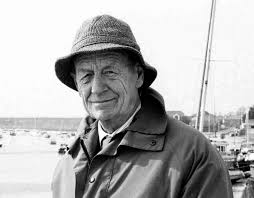
William Trevor: I was well aware of Leonard Cohen and Bob Dylan. I got to know their artistry at a young age. William Trevor? I had never heard of him until November 24th. There was a short piece, almost an obituary, by Mark Salter on the Op-Ed page of the Wall Street Journal: William Trevor’s Endless Empathy. I think the phrase Endless Empathy made me read the article.
Well, blissful unawareness didn’t have to remain that way. The man who the New Yorker referred to as “probably the greatest living writer of short stories in the English language” was no longer an unknown to me. So, I went out and bought a book. Did I buy a book of short stories? Of course, I should have and actually thought I did. The book I bought was called Excursions in the Real World. In fine print under the title, it said Memoirs. These memoirs are of his growing up in and around Cork, Ireland where he was born in 1928.
Trevor’s writing in his memoirs are precise, tightly crafted, meticulous, and eloquent in a way you would expect from a gifted Irish writer. I am not sure if this style is natural and that it flows easily with minimum re-writes or if it is the result of painstaking work and edits. Excursions in the Real World is a book that I have to put down. I want to only read it a vignette, or chapter, at a time. I had to read and savor everyword. Reading Trevor is akin to sipping fine cognac. Actually, the more I am reading this book, the better I am used to reading Trevor’s prose. I am experience the admiration Salter had for Trevor’s writing. In reading him for the first time, his prose unfolds in slow motion and blooms like a flower.
I will close this lengthy letter with the first paragraph from the chapter in his memoirs called “Bad Trip.”
The blow felt heavier than the news of other notable deaths this year. William Trevor, the Irish novelist and master of the short story, died this week. He was 88, so it didn’t come as a shock. But the news left me distraught, realizing I would never read another Trevor story for the first time.Until that moment, I had never heard of William Trevor, let alone read anything by him. Salter, a speechwriter and former chief of staff to Sen. John McCain and thus quite able to turn a phrase of his own, went on to say, “we’ve lost a great contemporary writer, possibly our greatest.” Wow. How could I not even be aware of him? I asked the aforementioned Professor Acosta. I felt I was OK, since she, as a professor of comparitive literature, was also blissfully unaware of William Trevor.
Well, blissful unawareness didn’t have to remain that way. The man who the New Yorker referred to as “probably the greatest living writer of short stories in the English language” was no longer an unknown to me. So, I went out and bought a book. Did I buy a book of short stories? Of course, I should have and actually thought I did. The book I bought was called Excursions in the Real World. In fine print under the title, it said Memoirs. These memoirs are of his growing up in and around Cork, Ireland where he was born in 1928.
Trevor’s writing in his memoirs are precise, tightly crafted, meticulous, and eloquent in a way you would expect from a gifted Irish writer. I am not sure if this style is natural and that it flows easily with minimum re-writes or if it is the result of painstaking work and edits. Excursions in the Real World is a book that I have to put down. I want to only read it a vignette, or chapter, at a time. I had to read and savor everyword. Reading Trevor is akin to sipping fine cognac. Actually, the more I am reading this book, the better I am used to reading Trevor’s prose. I am experience the admiration Salter had for Trevor’s writing. In reading him for the first time, his prose unfolds in slow motion and blooms like a flower.
I will close this lengthy letter with the first paragraph from the chapter in his memoirs called “Bad Trip.”
There have been terrible, ugly journeys that are remembered by me now for different aspects of distress. Races against time have lost. Delays at airports have triumphantly ruined weekends. Night has come down too soon when walking in the Alps. Theft has brought travel to a halt, toothache made a nightmare of it. Once a ferry mistakenly took off before its passengers had arrived on the quayside. Once the wheels of an aircraft did not come down. “Kaputt!’ a German grage mechenic declared of an old A.30 on an autobahn, and that was that.


