 |
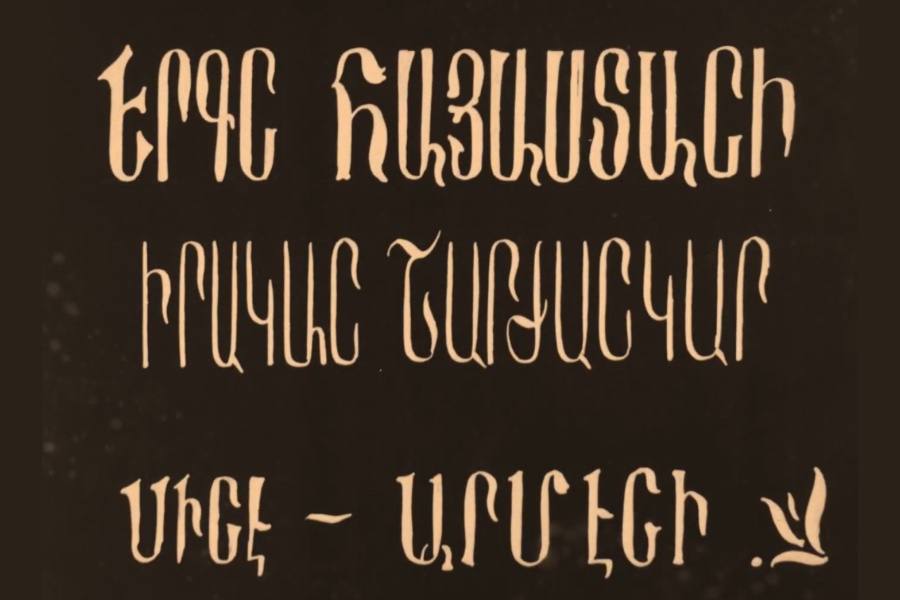
| The Title Screen of 'The Melody of Armenia' |
Originally published in The Armenian Weekly.
During this year’s Armenian Heritage Cruise (AHC), a restored silent film premiered on Jan. 11, accompanied by a newly composed soundtrack.
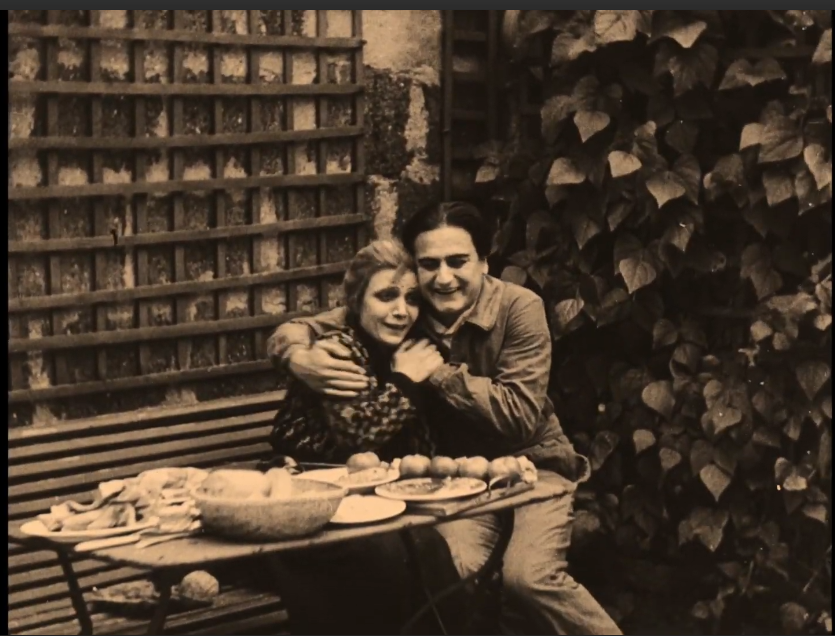
The Melody of Armenia tells the story of Mrs. Ghazarian, a genocide survivor living in France in the 1920s. She had six children, five of whom perished during the genocide. Her surviving son lives with her, and together, they attempt to rebuild their lives in exile. Like many survivors, Mrs. Ghazarian is haunted by the horrors she lived through and is deeply despondent over the loss of her family and the fate of the Armenian people. To her, the future appears bleak.
Her son tried to comfort her by pointing to the resilience of Armenians in the diaspora, offering examples of what they have built for themselves in France. He speaks of young Armenians thriving, carrying a long and proud cultural heritage, and urges his mother to take hope in the eternal Armenian spirit.
While this lovely and inspiring
narrative frames the film, it is not the real gist of it. Rather, the
story of the mother and son serves as a vehicle to show rare historical
film footage of real events. As the film opens, scenes of the burning of
Smyrna accompany the mother’s painful memories. When the son speaks of
Armenian renewal in France, the audience sees images of Armenian
schools, scouting organizations and community life.
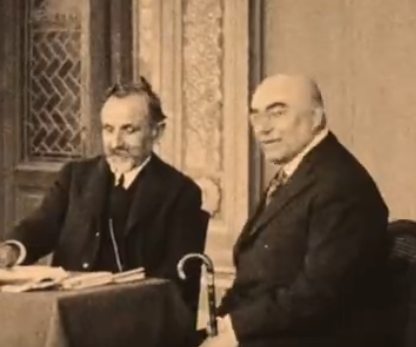
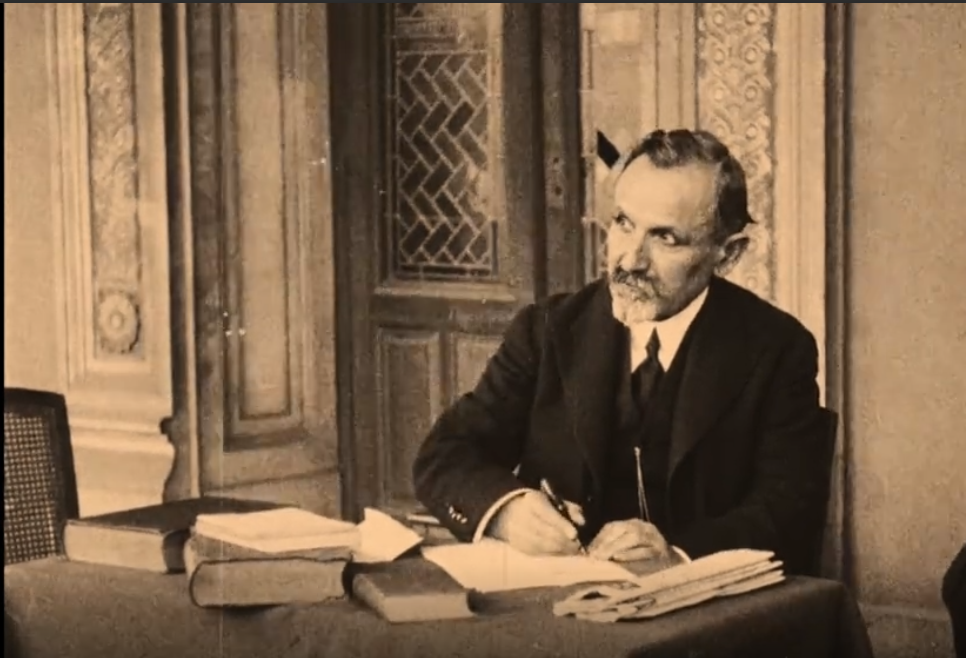
There is precious film footage of Armenian luminaries such as Alexander Khatisian, who held several posts in the First Armenian Republic, including prime minister, and Avetis Aharonian, the famed writer and chairman of the Parliament of the First Republic of Armenia. While the footage from Smyrna is certainly harrowing, the scenes depicting Armenian life in France during the 1920s are true treasure troves. It would be wonderful if similar films existed documenting Armenian life in Beirut, New York, Fresno, Boston and Detroit of that era.
This historical footage is the bulk of The Melody of Armenia and is what makes the film so special, valuable, endearing and a ‘must see’ for all of us. Visually, the film remains remarkably strong, despite being so old. The newly composed soundtrack is spectacular and really helps bring the silent images to life for modern audiences.
Not only did I have a chance to preview the film before its premiere, I also had the wonderful opportunity to talk with the two people responsible for restoring and reviving it. First and foremost is George Aghjayan, who found the movie in the Hairenik archives and led the restoration effort. George then recruited Mher Mnatsakanyan, who created the new soundtrack in collaboration with the gifted composer Martin Ulikhanyan.
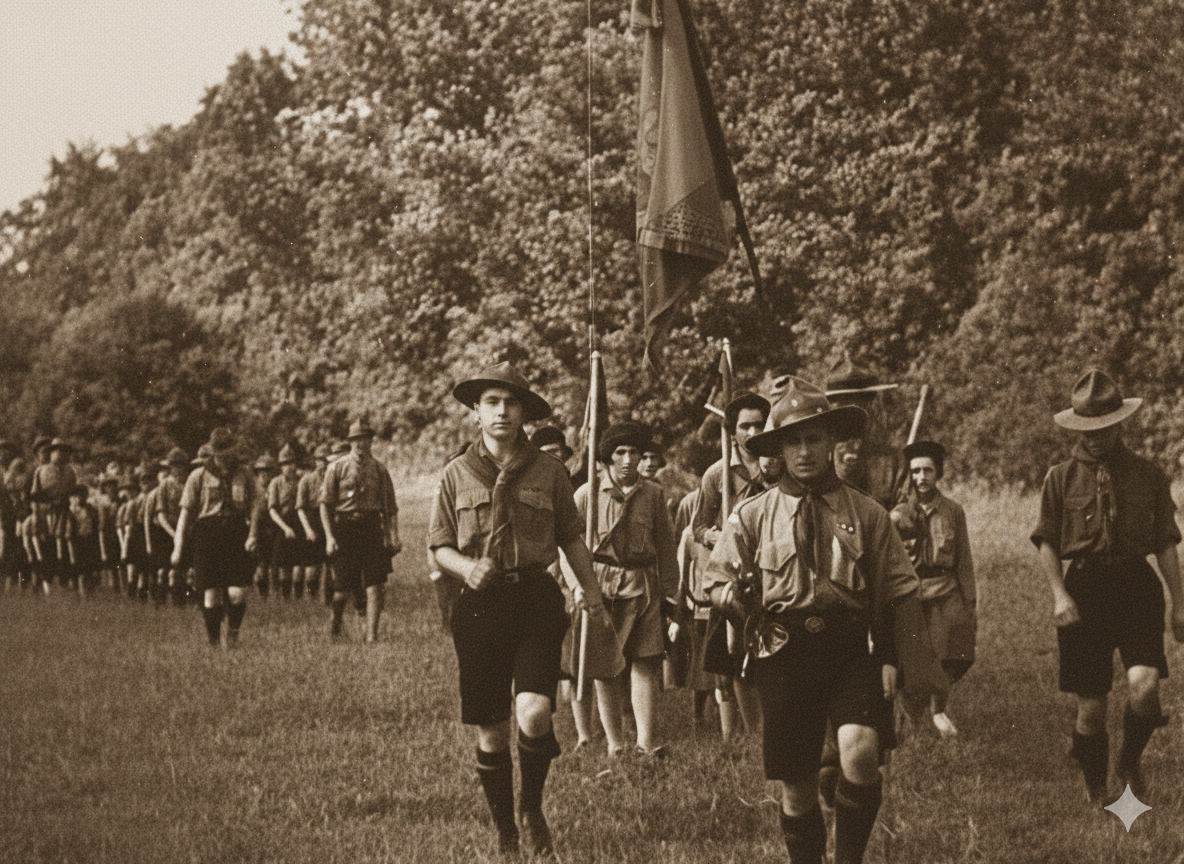 |
| HMEM Scouts |
Aghjayan graduated with honors from Worcester Polytechnic Institute in 1988 with a bachelor’s degree in actuarial mathematics and became a fellow of the Society of Actuaries in 1996. After a career in insurance and structured finance, he retired in 2014 to concentrate on Armenian research and cultural projects. His primary area of focus is the demographics and geography of Western Armenia, with a keen interest in the hidden Armenians living there today. He has also written and lectured extensively on Armenian genealogy and genocide denial and served on the Central Committee of the Armenian Revolutionary Federation (ARF) — Eastern United States, as well as the national board of the Armenian National Committee of America (ANCA).
Mnatsakanyan is a renowned Armenian musician and performer. He began his musical training at the Alexander Spendiaryan Music School and later earned a master’s degree in music performance from the Komitas Yerevan State Conservatory. Widely recognized as a master of the duduk, Armenia’s national instrument, he is also a skilled multi-instrumentalist who performs on the zurna and clarinet, blending traditional Armenian sounds with a refined modern sensibility. Based in Los Angeles, he travels frequently to perform at cultural festivals and community events.
Below is a summary of my conversations with George Aghjayan and Mher Mnatsakanyan.
Mark Gavoor (M.G.): Where and how did you come across this film?
George Aghjayan (G.A.): In early 2017, the ARF Bureau approached me to see if I was willing to take on the role of director of the ARF Archives. I agreed, as I had a strong interest in the archives and in making them more accessible to researchers. At the time, there was not much of a handoff of knowledge, though I had the benefit of Unger Tatul Sonentz Papazian and his infinite wealth of information about the archives’ history.
The first year or so, I focused on creating space for researchers to work, as that had not existed. In the summer of 2018, while moving boxes in the vault, I attempted to move a metal container that boxes had been stacked on with my foot. I thought it was empty, but it had significant weight to it. So, I moved the boxes to find a Western Union shipping container. There was a label on it, indicating it was being shipped from N. Porigian, 108 1/2 Main St. Binghamton NY to ARF Committee c/o B. Kavafian, 504 W. 178 St., New York, NY. A bit of genealogy research indicated that Nshan Porigian lived at that address in Binghamton from 1930 to 1932, so that supplied a timeline.
M.G.: What is it about? What is the name of the film?
G.A.: Inside the container, I found six reels of the film Երգն Հայաստանի / Les Melodies de l’Arménie, or The Melody of Armenia.
At the time, I had no ability to view the film. I had brought it to a company I had previously used for digitization purposes, but I received a call late on a Friday night telling me I had to pick it up immediately. The owner had noticed the film and realized their office was at risk. Until then, I had not realized the risks involved.
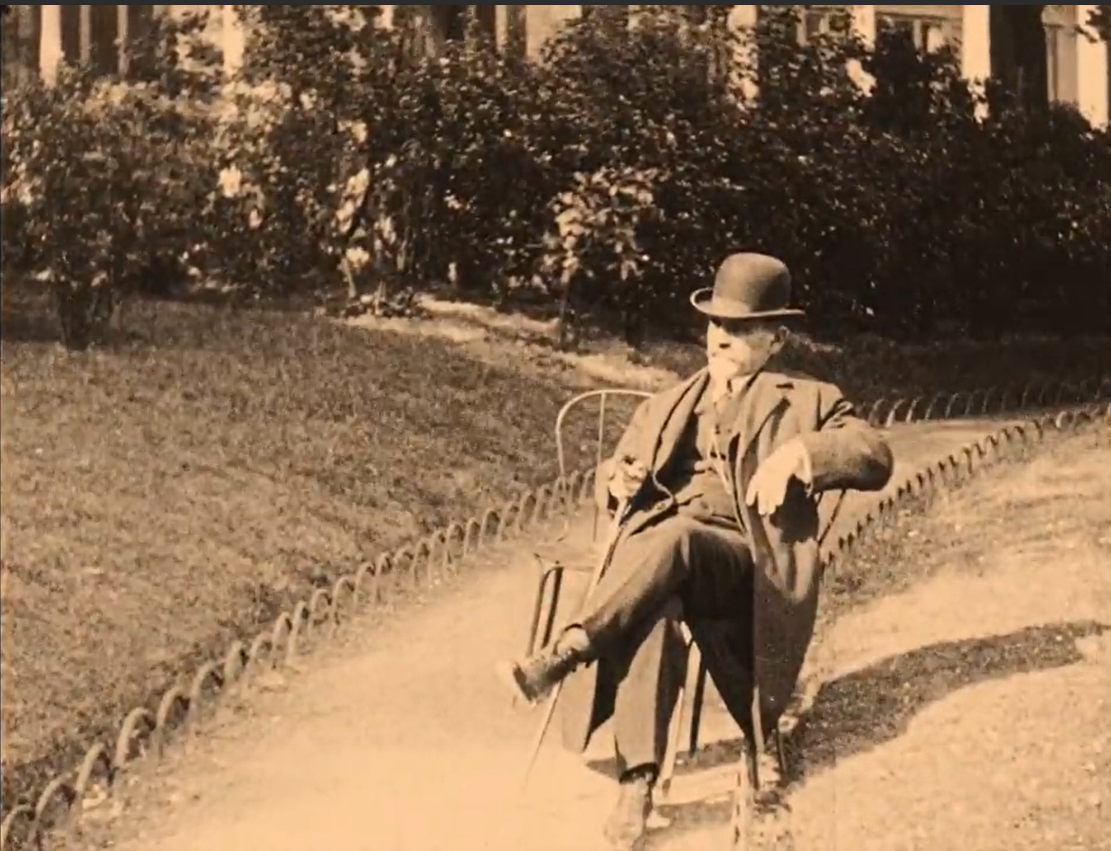 |
| Avetis Aharonian |
M.G.: What is the backstory of the film? How did you learn about it?
G.A.: I researched the film as best I could and found articles in a number of newspapers, including the Hairenik Daily. The film stated it was an Historical Documentary Film by Cinema Armenia and directed by N. Gorkanian/Corganian.
One of the actors, Shahan Saryan, was a well-known actor in the Middle East in the 1920s. The other actor was simply named Knarig, no surname. A 2002 article in Haratch mentions the film in the context of Atam Egoyan’s Ararat film and Turkish censorship, suggesting that Knarig was Charles Aznavor’s mother — a claim I found likely not to be true.
In any event, the first mention I find of the film is in an advertisement in the Dec. 14, 1930 issue of Haratch. The film was being shown on Dec. 26, possibly its premiere. There were additional ads in January 1931 for showings in Paris and Marseilles. The first article describing the content of the film I was able to find was the Feb. 21, 1931 issue of the Hairenik Daily, which announced the film would be shown around the U.S. The Feb. 6, 1932 issue of the Hairenik Daily announces the showing of the film in Franklin Union Hall, 41 Berkeley Street, Boston on Feb. 14. It could be this copy of the film that remained at the Hairenik Building after the showing.
M.G.: Who made it — director, producer, actors — and where and why was it made? Was it commissioned?
G.A.: There is a very informative article in the Arev newspaper of Cairo dated Aug. 25, 1931, written by the director, N, Gorkanian. He states that the film had been submitted to the censors of France and successfully received a license number (40049).
They demanded the film be reviewed a second time and, after that review, demanded the following changes:
1. Change the name of the film
2. Remove the last scene that includes the Armenian flag, Etchmiadzin and Mount Ararat.
M.G.: Clearly, you decided to do something with this film. What was your initial vision, and how has that evolved?
G.A.: From the beginning, my objective was to digitize the film for preservation. I also hoped to show the film around the world. Not only was the film historically important and unique, but screenings could be used to bring awareness to the rich history of the ARF archives and funds raised to create an endowment for the archives. But to show the film required a score, which did not exist.
 |
| Mother and Son |
M.G.: What shape was the film in when you found it? Did it need restoration?
G.A.: I forget the exact timeline, but I was in Washington — either lobbying or lecturing ANCA interns — and stopped by the Library of Congress (LOC) to visit with the Armenian-area specialist at the time, Levon Avdoyan. I brought up the film, and he put me in touch with people at the LOC who handle similar films. They, in turn, put me in touch with a company in Maryland that digitizes nitrate film for the LOC. My wife and I personally drove the film down, to remove any risk of shipping the sole copy of the film known to exist. In July 2019, I received the digitized version. The physical film is still with the company, until such time as the ARF Archives gifts it to the LOC, as they are better suited to store the film long-term.
M.G.: As a silent film, was there any documentation or score for the piano?
G.A.: There was no score that I am aware of, though I feel like, at some point, I found reference to songs that may have been played during showings of the film. Regardless, as the film has actual footage of the burning of Smyrna, my initial hope had been to have the film completed in time for the 100th anniversary of that tragedy. However, for various reasons, my attempts at getting a soundtrack fell through. And time kept passing, much to my frustration.
M.G.: The film includes title frames. What languages are used, and what languages do you plan to include in your re-issuing of the film?
G.A.: The original film has title frames in both Armenian and French. I am replacing the French text with other languages so that the film can be shown in any country. The Armenian text will remain as in the original. Currently, the text for the English and Arabic versions has been done, and those versions of the film will be created. Greek is another priority language, given the significance for the community there. Last summer, I met with a museum in Athens that is interested in sponsoring a showing of the film.
M.G. How did you, wisely, choose Mher to be the musical director/composer for the soundtrack?
G.A.: One year ago, while we were both on the Armenian Heritage Cruise, I approached Mher about the film and the concept. I still remember us on the top deck of the ship as I played the film for him. Mher’s response and passion for the project moved me, and I knew he was the right person to make this happen. As I am not a musician or musical in any way, my concepts were crude. It was Mher and the team he put together who took my initial thoughts, expanded on them and turned them into something special. From the time last year’s cruise ended, they worked tirelessly and the final score was completed at the end of August. Since then, I have been working on translations and final edits.
M.G.: When and where will the film premiere?
G.A.: It seemed natural that the premiere of the film would be on the 2026 Armenian Heritage Cruise. Once it has premiered there, we will work on showings in the U.S. and around the world.
 |
| Avetis Aharonian at his desk |
M.G.: Mher, what was your reaction when George called you?
Mher Mnatsakanyan (M.M.): George and I first met during the last 44 days of the Artsakh war, while protesting with the Armenian community in Worcester, Massachusetts. During that time, he invited me to be part of this project. That idea was reaffirmed on the Armenian Heritage Cruise in January 2025, when we met again on the ship. My initial reaction was one of excitement and responsibility; I wanted to make sure I could give my very best to this wonderful project, and I truly believe it led to an incredible final result.
M.G.: How did you approach composing the music? Have you ever done work like this before?
M.M.: It took about a month to craft the complete musical agenda and select the ensemble of musicians who would participate in this fabulous project. I reached out to my childhood friend, film composer Martin Ulikhanyan in Armenia, and together we began brainstorming ideas for the film’s musical language. Our approach was to create improvisational fragments based on a variety of renowned Armenian melodies that best capture the film’s narrative and each of its episodes, as well as some original pieces. My prior experience performing for film projects, especially during my years working at Disney World, proved invaluable.
M.G.: Who else was involved?
M.M.: It took some careful thought to decide who I wanted to invite into this project. After many back-and-forth discussions with my friend Martin, we arrived at what I believe is the best possible ensemble: myself as the soloist on duduk, clarinet and shevi; the Ulikhanyan sisters, Vika and Lyana, on violin and cello; and Lilit Zakaryan on piano.
M.G.: Was the music newly composed or based on existing works?
M.M.: Yes, the film features beautifully crafted fragments of beloved Armenian music, including pieces such as Krunk, traditional war dances and sacred liturgical melodies. Each of these was thoughtfully and specifically arranged to enhance the emotional arc of the story and to illuminate the film’s key scenes and episodes.
M.G.: How challenging — and rewarding — has this process been?
M.M.: Bringing this project to life required countless days and sleepless nights filled with discussions, phone calls, recording sessions and editing work with sound engineers, both here and in Armenia. Coordinating across time zones often made the process extremely challenging, but step by step, everything came together. In total, it took us nine months to complete, and it stands as one of the greatest highlights of my musical career — something I truly could not be more proud of.
M.G.: Will there be occasions to perform the soundtrack live?
M.M.: The premiere of the film will take place on the Armenian Heritage Cruise on Jan. 11, 2026, the very same AHC where George and I first agreed to bring this artistic vision to life. On that day, we will also release a CD in Armenia, and the music will be available on all major digital platforms, making it accessible to listeners around the world. We also plan to perform the film live as a fundraising event in support of the ARF Archives. I am truly excited to share this phenomenal work with a wider audience.
Looking ahead to July 2026, through my connections in Armenia, we are also exploring the opportunity to present a live performance of the film in Armenia, within the framework of the Golden Apricot International Film Festival.
= = =
I urge everyone to see this amazing film when it comes to your city. It was a labor of love for both George and Mher and I, for one, thank them deeply for their efforts. Until you have the opportunity to see the film, the soundtrack album is available on a variety of platforms.


No comments:
Post a Comment